SMART AUDIT

Inspection Management Software: Streamlining Quality Control in Manufacturing

24 Dec 2025

Digital Inspection Software for Manufacturing

Inspection management software has become a business-critical requirement, not a nice-to-have. Manufacturers are under constant pressure to maintain product quality, meet regulatory standards, and operate efficiently across increasingly complex operations. Digital transformation is reshaping how inspections are planned, executed, and monitored, from production lines to global supply chains.

Modern inspection management platforms, such as Smart Audit, enable organizations to move beyond manual checklists and reactive quality checks. By digitizing inspections, automating CAPA workflows, and providing real-time visibility into defects and compliance gaps, these tools help manufacturers reduce human error, prevent costly downtime, and improve overall ROI. Whether managing ISO 9001 audits, supplier inspections, digital inspection systems bring consistency, traceability, and speed to quality operations.

This rapid shift toward digital quality management is reflected in market growth. The global inspection management software market, valued at USD 9.20 billion in 2024, is expected to grow at a compound annual growth rate (CAGR) of 13.2% through 2030, driven by increasing regulatory complexity and the need for data-driven decision-making in manufacturing. In this guide, we explore the latest industry trends, essential features, and best practices to help you evaluate, select, and successfully implement the right inspection management solution for your organization.

What is Inspection Management Software?

Inspection management software is a digital platform designed to automate, track, and analyze quality inspections across manufacturing processes. It replaces manual checklists with mobile apps, cloud dashboards, enabling real-time data capture for tasks like visual checks, dimensional measurements, or supplier evaluations. These tools support hybrid (on-site/remote) workflows, aligning with trends like Industry 4.0 and sustainable manufacturing.

At its core, the software facilitates end-to-end inspection cycles: from planning and scheduling to execution, reporting, and corrective actions. For instance, an automotive manufacturer might use it to inspect assembly lines for defects using AI-powered image recognition, while a food processor ensures hygiene compliance via barcode scans and photo uploads. By centralizing data, it ensures traceability and supports standards like ISO 9001, AS9100, or FDA guidelines. Unlike traditional methods that rely on paper trails and human oversight, modern inspection software leverages machine learning to predict potential failures, reducing false positives and enhancing accuracy. This shift is particularly crucial in high-stakes industries where even minor defects can lead to recalls costing millions.

The evolution of inspection management software reflects broader digitalization efforts. Early versions focused on basic digitization, but current iterations incorporate advanced technologies like augmented reality (AR) for guided inspections and blockchain for tamper-proof audit trails. This makes them indispensable for manufacturers aiming to meet global standards while optimizing resources.

Why Inspection Management Software Is Essential

Governments and regulators are placing greater emphasis on traceability, sustainability, and risk-based quality management. Initiatives such as the EU Green Deal and stricter enforcement of food, pharmaceutical, and manufacturing regulations are pushing organizations to adopt digital, auditable inspection systems that can demonstrate compliance in real time.

Manufacturers that have adopted digital inspection platforms consistently report fewer quality escapes, faster audit cycles, and improved operational efficiency. By replacing manual processes with automated workflows, inspection management software enables organizations to detect issues earlier, standardize inspections across sites, and respond faster to non-conformances.

Key Benefits of Inspection Management Software

Real-Time Quality Control
AI-powered inspection tools analyze data as it is captured, allowing quality teams to identify anomalies and deviations immediately. This early detection helps prevent downstream defects, product recalls, and rework, particularly critical in high-volume manufacturing environments.

Regulatory Compliance and Full Traceability
Modern inspection platforms automatically generate audit-ready documentation aligned with ISO, FDA, GFSI, and industry-specific standards. Every action inspection, finding, corrective action, and approval is logged, creating a complete and defensible audit trail that reduces compliance risk.

Operational Efficiency and Faster Inspections
Mobile inspection applications significantly reduce inspection cycle times by eliminating duplicate data entry and manual reporting. Inspectors can capture findings, photos, and signatures on-site, minimizing production disruptions and improving overall throughput.

Data-Driven Decision Making
Advanced analytics transform inspection data into actionable insights. Trend analysis helps identify recurring defects, high-risk processes, and equipment wear patterns, enabling predictive maintenance and continuous improvement rather than reactive problem-solving.

Scalability for Global and Remote Operations
Cloud-based inspection management systems support multi-site operations and remote collaboration. Quality teams can manage inspections across plants, suppliers, and regions from a single platform, an essential capability in today’s volatile supply chain environment.

As organizations recover from recent economic uncertainty, these systems play a critical role in reducing waste, improving resource utilization, and maintaining compliance with fewer skilled workers. Automation allows quality professionals to focus on high-value analysis instead of repetitive administrative tasks.

Key Features of Modern Inspection Management Software

Key Features of Modern Inspection Management Software

To remain competitive manufacturers should look for inspection management solutions that align with current technology and regulatory trends. Essential features include:

Mobile-First Inspection Applications
Native iOS and Android apps enable inspectors/auditor’s to conduct inspections on-site with offline capability, photo and video evidence capture, and digital signatures, ensuring inspections are completed accurately and without delays.

Customizable, Standards-Aligned Checklists
Drag-and-drop inspection templates support ISO, HACCP, GMP, and internal standards.

Real-Time Cloud Dashboards
Centralized dashboards provide instant visibility into inspection status, findings, and corrective actions across all sites. Role-based access ensures sensitive quality data remains secure.

Automated Reporting and CAPA Workflows
Inspection findings automatically trigger corrective and preventive actions, with assigned owners, deadlines, and verification steps. Audit-ready reports can be generated instantly, reducing preparation time.

Sustainability and Environmental Tracking
Leading platforms support monitoring of waste, resource usage, and efficiency metrics, aligning inspection programs with sustainability and ESG initiatives.

Advanced Security and Compliance
With increasing cyber risks, modern systems include GDPR compliance, SOC 2 controls, and secure audit trails to protect sensitive operational and quality data.

Top Inspection Management Software Solutions for 2026

Smart Audit (Inspection Management Software)

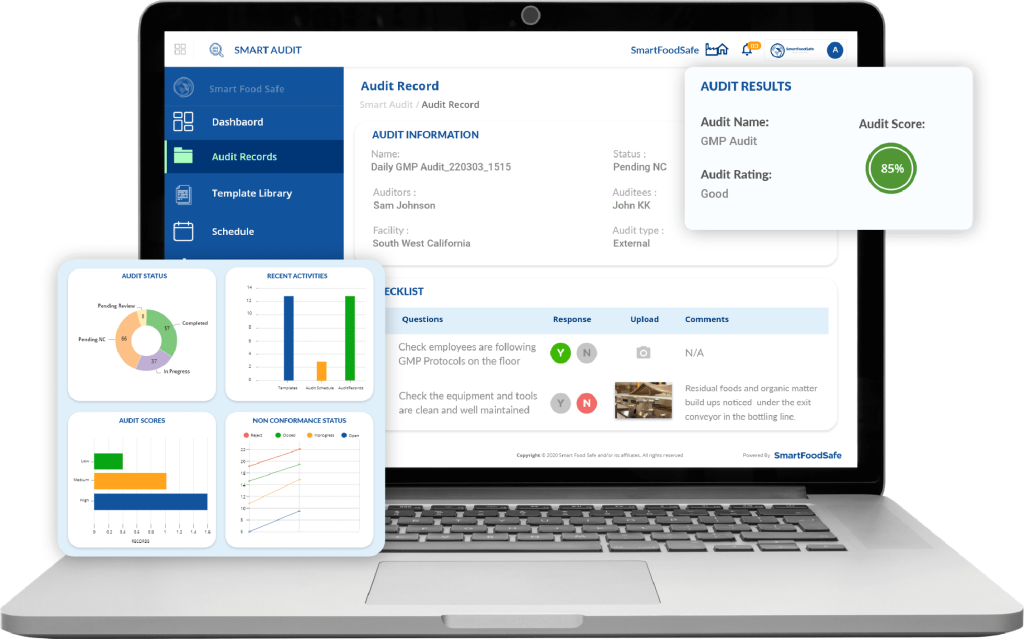
Home page Smart audit

Smart Audit is an AI-powered inspection and audit management platform designed specifically for manufacturing and compliance-driven industries. It combines mobile inspections with real-time analytics and automated corrective action workflows.

Key Features of Smart Audit 

  • Mobile-First Inspections (Online & Offline)
    Enables inspectors to perform audits and inspections using mobile devices, even without internet connectivity, ensuring uninterrupted inspection workflows on the shop floor or remote locations.
  • Pre-Built & Customizable Compliance Checklists
    Supports ISO, HACCP, GMP, FSMA, and industry-specific inspection templates while allowing organizations to customize checklists to match internal quality and regulatory requirements.
  • Real-Time Inspection Dashboards
    Provides live visibility into inspection progress, non-conformances, and compliance status across sites, helping quality teams make faster, data-driven decisions.

  • Automated CAPA Management
    Converts inspection findings directly into corrective and preventive actions with assigned owners, deadlines, and verification steps, ensuring timely issue resolution and audit readiness.
  • Photo & Evidence Capture
    Allows inspectors to attach photos, comments, and digital signatures during inspections, creating strong audit trails and reducing documentation gaps.
  • ISO & Regulatory Compliance Support
    Designed to align with ISO 9001, ISO 22000, FDA, and GFSI requirements, making it easier for organisations to prepare for internal, external, and certification audits.
  • Role-Based Access & Audit Trails
    Ensures data security and accountability by controlling user access levels and maintaining complete logs of inspection activities and changes.
  • Scalable for SMEs & Growing Enterprises
    Built to support Big, small and mid-sized manufacturers while scaling easily across multiple plants, departments, and inspection programs.

Smart Audit is widely adopted by All – sized manufacturers for its ease of implementation, scalability, and fast ROI, making it a strong fit for organizations modernizing from paper-based inspections.

SafetyCulture (iAuditor)

SafetyCulture remains one of the most widely recognized inspection platforms, particularly for operational safety, quality checks, and frontline inspections.

Notable capabilities include:

  • Highly intuitive mobile inspection apps with unlimited users
  • AI-assisted insights that surface recurring issues and risk trends
  • Broad template library for safety, quality, and operational audits
  • Growing IoT integrations supporting condition-based and predictive inspections.

ETQ Reliance

ETQ Reliance is an enterprise-grade quality and inspection management system commonly used in complex manufacturing environments.

Why it competes directly with Smart Audit:

  • Advanced inspection and audit modules tightly integrated with quality processes
  • Strong CAPA, nonconformance, and risk management capabilities
  • Configurable workflows suitable for multi-site manufacturing operations
  • Robust reporting and compliance traceability

ETQ is often chosen by organizations with mature quality programs and centralized governance requirements.

Safety Chain

SafetyChain is a leading inspection and compliance platform for food, beverage, and consumer goods manufacturing, where inspections are closely tied to regulatory and supplier requirements.

Core strengths include:

  • End-to-end inspection and compliance management
  • Supplier and facility inspection programs within a single platform
  • Real-time monitoring and corrective action tracking
  • Strong alignment with food safety and quality standards

Intelex

Intelex offers a comprehensive quality, safety, and inspection management solution designed for industrial and asset-intensive operations.

Key competitive features:
  • Customizable digital inspection forms and workflows
  • Centralized dashboards for inspection performance and trends
  • Integration with EHS and quality management modules
  • Scalable cloud architecture for global manufacturing teams

How to Implement Inspection Management Software A Step-by-Step Framework

Implementing inspection management software is not a plug-and-play activity. It is a strategic quality transformation that directly impacts product consistency, compliance readiness, operational efficiency, and long-term scalability. Organizations that approach implementation methodically achieve faster adoption, better data quality, and measurable ROI.

The following framework outlines how modern manufacturers should implement inspection management software to maximise value.

1. Assess Inspection Readiness and Operational Gaps

The first step is gaining a clear understanding of how inspections are currently performed and where inefficiencies exist. Many organizations operate with fragmented processes, manual checklists, siloed data, delayed reporting, and inconsistent inspection criteria across teams or locations.

At this stage, organizations should evaluate:

  • How inspection data is captured, stored, and reviewed
  • Where delays or errors occur in inspection workflows
  • Whether inspection records are audit-ready at all tims
  • How effectively inspection findings translate into corrective actions

This assessment must also account for future requirements such as AI-driven defect detection, predictive inspections, and remote or multi-site operations. A thorough readiness analysis ensures the software selected solves real problems rather than digitising inefficiencies.

2. Select Software Aligned with Operational and Compliance Needs

Choosing the right inspection management software requires alignment between business objectives, compliance obligations, and workforce usability. Feature depth alone is no longer sufficient, ease of adoption and integration capability are equally critical.

Organizations should prioritise platforms that offer:

  • Mobile-first inspections with offline functionality
  • Configurable workflows aligned with internal SOPs and standards
  • Built-in compliance support for ISO and industry frameworks
  • Scalable architecture for multi-site growth

AI and analytics capabilities should be viewed as enablers of proactive quality management rather than optional add-ons. The goal is to move from reactive inspections to predictive, insight-driven decision-making.

3. Digitise, Standardise, and Integrate Inspection Processes

Once software is selected, the focus shifts to converting inspection knowledge into structured, digital workflows. This step is critical for achieving consistency and traceability across operations.

Key implementation activities include:

  • Creating standardized digital inspection checklists
  • Defining inspection frequencies based on risk and criticality
  • Automating inspection scheduling and reminders
  • Integrating inspection data with existing enterprise systems
  • Establishing centralized document and evidence management

Standardisation ensures inspections are performed the same way regardless of inspector, shift, or location, while integration eliminates duplicate data entry and improves data reliability.

4. Enable Adoption Through Role-Based Training

Training plays a decisive role in determining whether inspection management software delivers value or becomes underutilized. Training must focus on adoption and confidence, not just system navigation.

Effective training strategies include:

  • Role-specific guidance for inspectors, supervisors, and managers
  • Emphasis on how digital inspections improve daily workflows
  • Clear explanation of how inspection data supports compliance and decision-making
  • Ongoing refreshers as analytics and AI features evolve

When teams understand how the system reduces effort, improves visibility, and strengthens accountability, adoption becomes organic rather than forced.

5. Execute a Controlled Rollout and Validate Performance

A phased rollout allows organizations to validate inspection workflows, refine configurations, and address adoption challenges before full deployment. This approach reduces operational risk and builds internal confidence.

During rollout, organizations should monitor:

  • Inspection completion rates
  • Data accuracy and consistency
  • Time taken to complete inspections
  • Responsiveness to corrective actions

These early performance indicators provide valuable feedback and ensure the system is optimized before scaling across operations.

6. Scale and Align with Long-Term Business Objectives

After stabilisation, inspection management software should be scaled across all relevant operations and aligned with broader organizational goals such as sustainability, ESG reporting, and operational excellence.

At scale, organizations can:

  • Maintain consistent inspection standards across locations
  • Track environmental and waste metrics alongside quality data
  • Ensure audit readiness at all times
  • Adapt quickly to regulatory or operational changes

At this stage, inspection management software becomes a strategic asset, supporting governance, risk management, and long-term competitiveness.

Implementation Outcome and ROI Expectations

When implemented with a structured, user-centric approach, inspection management software typically delivers ROI within 6–9 months. Benefits include reduced inspection effort, fewer defects, faster audits, improved visibility, and stronger compliance control.

Common Pitfalls in Inspection Management Software Adoption

Even with advanced tools available in 2026, many organizations fail to realize the full value of inspection management software due to avoidable implementation mistakes. Understanding these pitfalls early helps prevent wasted investment, low adoption, and incomplete transformation.

Overlooking Mobile User Experience

Inspection software is primarily used on factory floors, warehouses, and remote sites. When mobile interfaces are slow, unintuitive, or unreliable offline, inspectors revert to manual workarounds, leading to inconsistent data and errors. Instead choose a platform with a proven mobile-first design, offline functionality, and fast data synchronization. Usability should be validated through real user testing not just feature demos.

Underestimating Compliance and Audit Requirements

Inspection software that lacks built-in compliance logic can create hidden risks. Without proper audit trails, version control, and standards alignment, organizations may struggle during regulatory audits. So ensure the platform supports ISO and industry frameworks with traceable records, approval workflows, and tamper-proof audit histories. Compliance should be embedded, not manually enforced.

Choosing Software That Doesn’t Scale

Some tools perform well for small teams but fail as operations expand across locations, business units, or regions. Scalability limitations often surface after adoption when switching platforms becomes costly. Adopt cloud-based inspection management software designed for multi-site operations, flexible user roles, and growing data volumes, with pricing models that support long-term expansion.

Underinvesting in Training and Change Management

Low adoption is often caused not by software limitations, but by insufficient training and unclear process ownership. When teams don’t understand how the system benefits them, usage becomes inconsistent. Allocate sufficient resources for onboarding, refresher training, and continuous enablement. Training should focus on improving daily workflows, not just explaining features.

Best Practices for Inspection Management Software

Organizations that achieve measurable gains from inspection management software follow a set of best practices aligned with modern manufacturing, compliance, and sustainability expectations.

Adopt a Mobile-First Inspection Strategy

Inspections happen where work is performed, not behind desks. Mobile-first platforms empower frontline teams to capture accurate data instantly, improving inspection speed, accuracy, and accountability.

Integrate Sustainability and ESG Metrics

Inspections increasingly support sustainability reporting. Tracking waste, energy deviations, and environmental nonconformances during inspections aligns quality operations with ESG objectives and regulatory expectations.

Maintain Continuous Training and System Updates

Inspection platforms evolve rapidly with new analytics and automation features. Regular training ensures teams fully utilize system capabilities and maintain consistent inspection quality across time.

Prioritize Data Security and Governance

Inspection data often contains sensitive operational and compliance information. Strong security controls, including role-based access, encryption, and regulatory compliance, are essential to protect data integrity.

Enable Hybrid and Remote Inspections

Cloud-based inspection systems support collaboration across locations, enabling remote reviews, approvals, and analytics without disrupting on-site operations. This flexibility is critical for global and distributed teams.

Use Inspection Data as a Performance Driver

Inspection data should feed continuous improvement initiatives. Establishing KPIs such as defect recurrence, inspection cycle time, and corrective action closure rates ensures inspections drive measurable business outcomes.

Organizations following these best practices consistently report 20–40% efficiency improvements, stronger compliance readiness, and improved decision-making across operations.

Why Smart Audit Stands Out for Inspection Management

Smart Audit is purpose-built to support modern inspection and quality operations across manufacturing and regulated industries. Its architecture reflects how inspections are performed today, mobile, data-driven, and compliance-focused.

Key strengths include:

  • AI-assisted inspection analytics that surface trends and risk patterns from inspection data
  • Mobile and offline inspection capabilities that ensure uninterrupted data capture on the shop floor
  • Built-in compliance alignment with structured templates and full audit traceability
  • Automated corrective action workflows that close the loop between findings and resolution
  • Centralized dashboards providing real-time visibility across teams and locations

Unlike generic inspection tools, Smart Audit is designed to scale with operational complexity while remaining easy for frontline teams to adopt. Its balance of usability, analytics, and compliance control enables organizations to transition from manual inspections to a connected, insight-driven inspection system.

For organisations modernising quality and inspection processes, Smart Audit supports faster adoption, measurable ROI, and long-term operational resilience.

See What Smarter Inspections Look Like with Smart Audit

By now, one thing should be clear, inspections are no longer just about compliance, they’re about control, consistency, and confidence. Organizations that continue to rely on manual or disconnected inspection processes will struggle to keep up with rising quality expectations, regulatory pressure, and operational complexity.

Smart Audit was built for this exact reality.
We designed Smart Audit to help organizations run inspections the way modern operations actually work, across multiple locations, and in real time. From mobile inspections and automated corrective actions to AI-driven insights and audit-ready documentation, Smart Audit turns inspection data into decisions you can act on immediately.

What truly sets Smart Audit apart is not just the technology, but the outcomes it delivers:

  • Faster, more consistent inspections
  • Clear visibility into risks and recurring issues
  • Stronger compliance without added administrative burden
  • Teams that actually adopt the system and use it daily

If you’re evaluating inspection management software, the best way to understand the difference is to see it in action with your own workflows. A Smart Audit demo isn’t a generic walkthrough, it’s a practical look at how your inspections, reports, and corrective actions can be simplified and connected in one platform. If your goal is to reduce inspection effort, improve quality control, and stay audit-ready at all times, Smart Audit is built to support you today, and scale with you tomorrow.

Book a Smart Audit demo and experience how smarter inspections lead to stronger operational control.

Audit Management Software

Have a consistent, working internal audit strategy that continuously brings about compliance in the middle of regulatory updates with Smart Audit’s audit management features.

Audit Management Software

Have a consistent, working internal audit strategy that continuously brings about compliance in the middle of regulatory updates with Smart Audit’s audit management features.