 Manufacturing businesses face unique operational complexities that demand rigorous internal audit processes. From supply chain integrity to quality control, regulatory compliance to workplace safety, manufacturers must maintain continuous oversight across multiple facilities, processes, and regulatory frameworks. The right internal audit management software transforms these challenges into streamlined, data-driven opportunities for operational excellence.
As manufacturing organizations scale their operations, manual audit processes become increasingly inefficient and error-prone. Decision-makers in the manufacturing sector are recognizing that digital audit management solutions are no longer optional, they’re essential for maintaining competitive advantage, ensuring compliance, and driving continuous improvement.
This comprehensive guide examines the five leading internal audit management software solutions specifically suited for manufacturing businesses, helping you make an informed decision that aligns with your operational requirements and strategic objectives.
Manufacturing businesses face unique operational complexities that demand rigorous internal audit processes. From supply chain integrity to quality control, regulatory compliance to workplace safety, manufacturers must maintain continuous oversight across multiple facilities, processes, and regulatory frameworks. The right internal audit management software transforms these challenges into streamlined, data-driven opportunities for operational excellence.
As manufacturing organizations scale their operations, manual audit processes become increasingly inefficient and error-prone. Decision-makers in the manufacturing sector are recognizing that digital audit management solutions are no longer optional, they’re essential for maintaining competitive advantage, ensuring compliance, and driving continuous improvement.
This comprehensive guide examines the five leading internal audit management software solutions specifically suited for manufacturing businesses, helping you make an informed decision that aligns with your operational requirements and strategic objectives. 
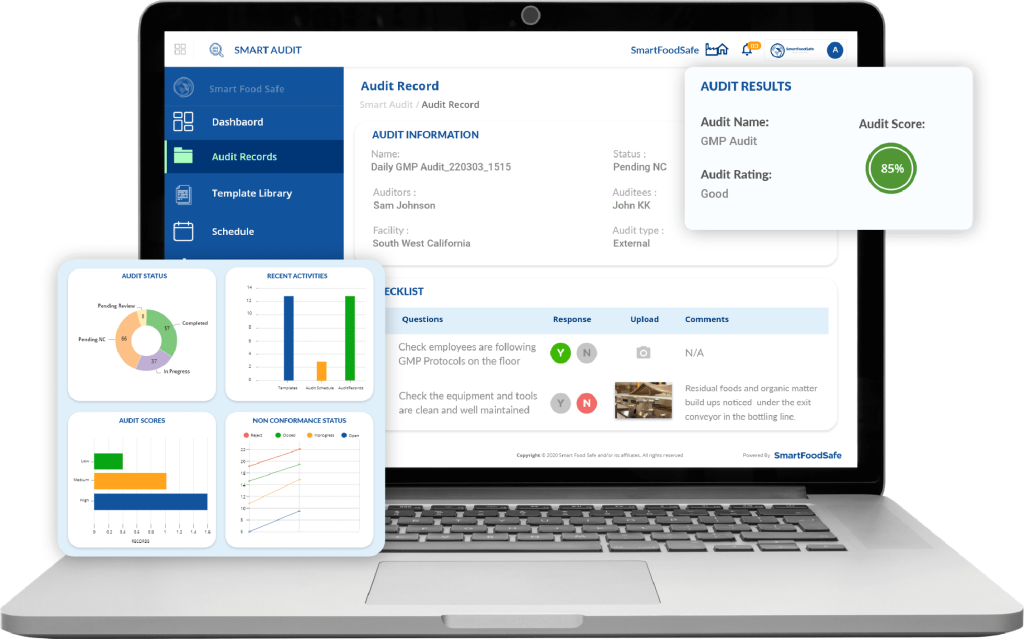
Smart Audits represents a modern approach to internal audit management specifically designed for manufacturing businesses seeking comprehensive yet user-friendly solutions. The platform excels in providing manufacturing organizations with the tools needed to digitize audit processes across all operational areas.
The software’s strength lies in its intuitive interface that reduces training time while delivering sophisticated functionality. Manufacturing businesses appreciate the platform’s ability to create unlimited custom audit templates that mirror their specific processes, whether conducting 5S audits, layered process audits, safety inspections, or supplier evaluations.
Smart Audits offers robust mobile capabilities that empower auditors to conduct inspections directly on the shop floor using tablets or smartphones. The offline functionality ensures uninterrupted audit execution even in areas with connectivity challenges, a common reality in manufacturing facilities. When connectivity is restored, data synchronizes automatically, maintaining data integrity across the organization.
The platform’s corrective action management system transforms audit findings into structured improvement initiatives. Automated notifications ensure responsible parties receive timely alerts about assigned actions, while escalation workflows guarantee that overdue items receive appropriate management attention. This systematic approach prevents audit findings from becoming forgotten documentation exercises and instead drives measurable operational improvements.
For decision-makers focused on continuous improvement, Smart Audits provides comprehensive analytics dashboards that reveal trends, identify systemic issues, and benchmark performance across facilities. These insights enable manufacturing leaders to allocate resources strategically, address root causes rather than symptoms, and demonstrate compliance to regulators and customers.
Key Features:
Smart Audits offers robust mobile capabilities that empower auditors to conduct inspections directly on the shop floor using tablets or smartphones. The offline functionality ensures uninterrupted audit execution even in areas with connectivity challenges, a common reality in manufacturing facilities. When connectivity is restored, data synchronizes automatically, maintaining data integrity across the organization.
The platform’s corrective action management system transforms audit findings into structured improvement initiatives. Automated notifications ensure responsible parties receive timely alerts about assigned actions, while escalation workflows guarantee that overdue items receive appropriate management attention. This systematic approach prevents audit findings from becoming forgotten documentation exercises and instead drives measurable operational improvements.
For decision-makers focused on continuous improvement, Smart Audits provides comprehensive analytics dashboards that reveal trends, identify systemic issues, and benchmark performance across facilities. These insights enable manufacturing leaders to allocate resources strategically, address root causes rather than symptoms, and demonstrate compliance to regulators and customers.

SafetyCulture, powered by its iAuditor platform, has established a strong presence in manufacturing audit management through its extensive template library and ease of deployment. The platform serves manufacturing businesses ranging from small operations to multinational corporations seeking to standardize audit processes across diverse locations.
Top 5 Key Features:

MasterControl delivers enterprise-grade quality and compliance management capabilities that extend well beyond basic audit management. For manufacturing businesses in highly regulated industries, particularly pharmaceuticals, medical devices, biotechnology, and food and beverage, MasterControl provides the comprehensive functionality needed to navigate complex compliance landscapes.
Top 5 Key Features:

ComplianceQuest delivers a comprehensive Quality Management System (QMS) platform built on Salesforce infrastructure, offering manufacturing businesses powerful audit management capabilities integrated with broader quality and compliance functions. The platform serves manufacturing organizations seeking enterprise-grade functionality with the flexibility to adapt to evolving business requirements.
Top 5 Key Features:

ETQ Reliance represents a mature, enterprise-focused quality management platform that has served manufacturing businesses for decades. The software delivers sophisticated audit management capabilities as part of a comprehensive quality and compliance suite designed for complex manufacturing environments.
Top 5 Key Features:


 English
 French
 Spanish

