English
 French
 Spanish


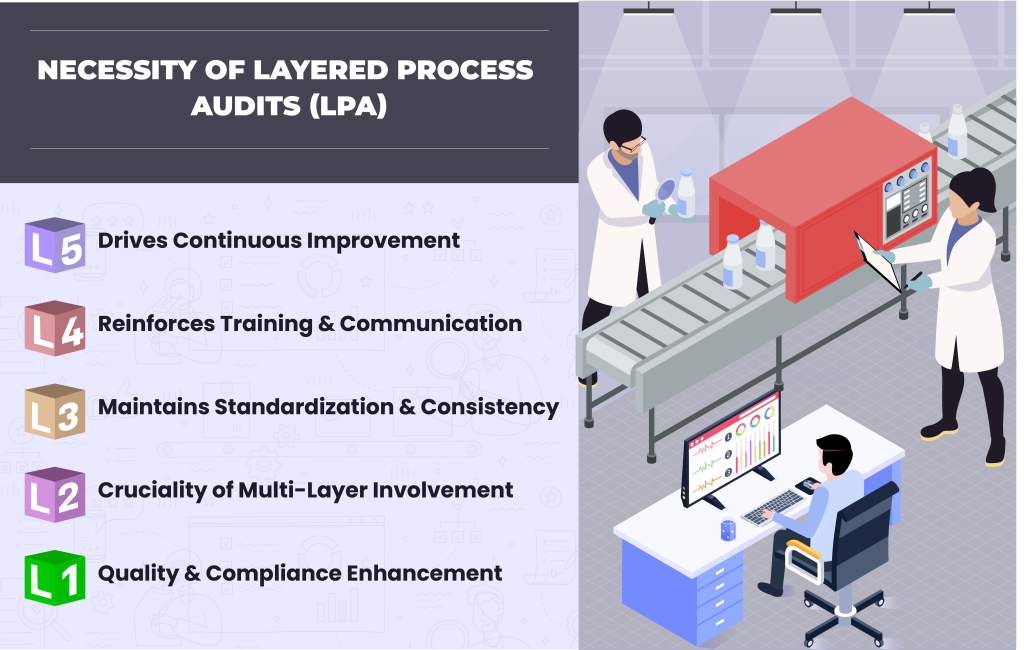
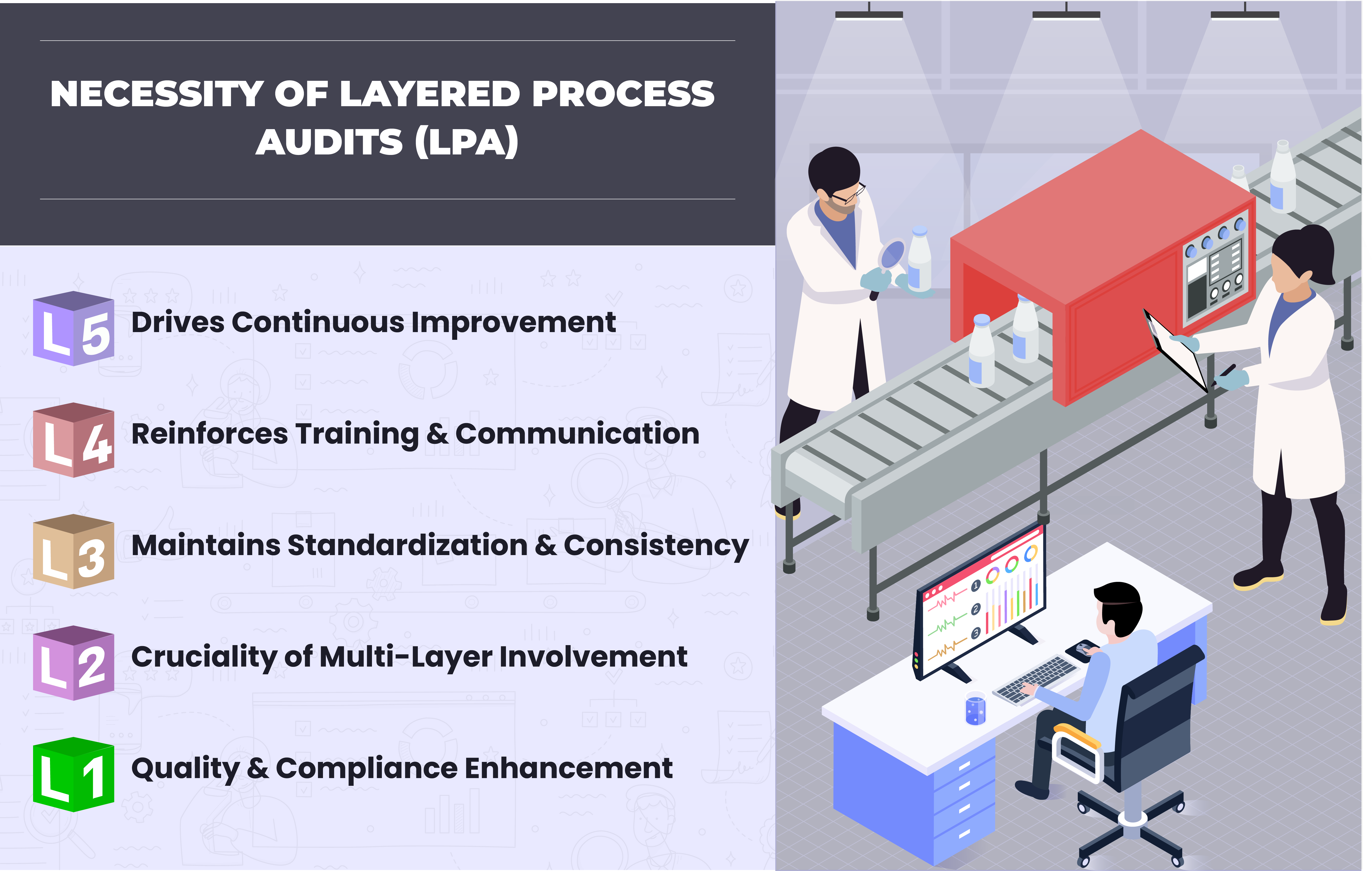
In the manufacturing industry, layered process audits (LPAs) serve as the critical dashboard, providing continuous oversight and immediate feedback to ensure processes are running smoothly and efficiently. By systematically layering audits from various organizational levels, LPAs create a robust framework for detecting issues early, fostering a culture of quality, and driving relentless improvement.
Background Context on Layered Process Audits
Layered process audits (LPAs) are structured inspections conducted across multiple organizational levels to ensure adherence to operational processes. They involve frontline employees, middle management, and upper management, each following a predefined audit checklist.
Layered Process Audits (LPA) originated in the automotive industry during the 1980s and 1990s, driven by the need for better quality standards and procedures following the oil crises. In 1994, Chrysler conducted the first LPA, leading to the successful implementation of the QS9000 standard for Automotive Quality Management Systems by the Automotive Industry Action Group (AIAG).
Now, industries like manufacturing, healthcare, and construction benefit significantly from LPAs, as they identify process weaknesses, address root causes of issues, and promote sustained process improvement. Furthermore, LPAs shift the focus from inspecting final products to validating the consistency and effectiveness of production processes, aiming to uphold operational standards, promptly rectify deviations, and drive continuous improvement.
Importance of Layered Process Audits
Organizations today face growing complexities and challenges in managing the total cost of quality, which includes substantial risks that can amount to tens of billions of dollars across various industries. A critical area often overlooked for risk management is comprehensive auditing of operations and processes, in addition to traditional product audits.
Implementing an LPA system not only identifies ineffective error-proofing measures and early-stage deficiencies but also guides management in allocating resources to address symptoms, identify root causes, and implement corrective actions promptly. When senior managers and executives actively endorse and participate in LPAs, they underscore the significance of quality across the entire organization.
Key Components of LPAs
Unlike reactive product audits, layered process audits (LPAs) offer a proactive approach, ensuring that essential tasks are consistently performed correctly at every stage of production. The following are the pivotal elements of LPAs:
⇒ Layered Approach
LPAs involve multiple layers of audits conducted by different levels of the organization, from team leaders to senior management. This multi-tiered approach ensures oversight and accountability.
⇒ Audit Scope
The scope of an LPA covers the entire manufacturing process, from incoming materials to final product release. This comprehensive review evaluates the effectiveness of quality systems and procedures.
⇒ Audit Frequency
LPAs are typically conducted on a regular schedule, such as annually or biannually, to ensure ongoing compliance and identify any process changes or improvements needed.
⇒ Audit Team Composition
LPA audit teams are composed of qualified lead auditors and subject matter experts who have in-depth knowledge of the manufacturing processes being evaluated.
⇒ Standardized Checklists
Detailed checklists are created to guide the audit and ensure all relevant areas are thoroughly reviewed, including documentation, equipment, personnel training, and more.
⇒ Audit Reporting
After the LPA is complete, a comprehensive report is generated that documents any findings, observations, and recommendations for corrective or preventive actions.
Implementation of Layered Process Audits
Here’s a guide for managing an LPA program successfully:
1. Learn LPA Fundamentals
Managers and process owners must first grasp the foundation of LPAs. The Automotive Industry Action Group’s CQI-8 Layered Process Audits Guideline serves as a basic resource. It outlines key aspects such as:
- Explaining LPAs to the team to ensure understanding and engagement.
- Developing checklist questions that are clear, specific, and objective.
- Establishing best practices for monitoring, measuring, and maintaining the LPA program.
2. Build a Strong LPA Team
Create a diverse audit management team comprising representatives from various organizational levels—administration, sales, quality, and more. This approach fosters a comprehensive perspective and reduces biases that can arise from insular auditing practices. Rotating auditors also enhances data integrity by preventing complacency and promoting fresh insights.
3. Define Audit Questions
Craft focused audit questions tailored to address critical quality control issues and high-risk processes identified through tools like Failure Modes and Effects Analysis (FMEA). Each LPA should include 3 to 10 specific questions designed to yield actionable insights, emphasizing:
- Objective responses (typically yes/no).
- Clear specifications and criteria for verification.
- Accessibility to auditors unfamiliar with technical details.
4. Plan the Audit Program
Structure the LPA program into distinct layers of audits:
- Layer 1: Conducted daily by supervisors and team leads across all shifts.
- Layer 2: Managed by middle management on a weekly basis.
- Layer 3: Led by plant managers monthly, with executive audits occurring quarterly or annually. Clearly defining these layers and their frequencies ensures comprehensive coverage and accountability throughout the organization.
5. Execute the LPA Rollout
Carry out the LPA program with efficiency and clarity:
- Utilize automated LPA software to streamline scheduling, notifications, and data aggregation, reducing administrative burdens significantly.
- Emphasize transparent communication of program benefits and expectations to cultivate a culture focused on improvement rather than fault-finding.
- Establish a closed-loop process for managing non-conformances swiftly and effectively, ensuring continuous improvement and adherence to standards.
6. Measure and Enhance LPA Effectiveness
Evaluate the success of the LPA program through ongoing analysis and adaptation:
- Regularly review audit data to identify trends and opportunities for process enhancement.
- Update audit questions and procedures as processes evolve or new challenges emerge.
- Develop leading metrics such as audit completion rates and corrective action closure times to gauge program effectiveness and drive continuous improvement efforts.
Setting up an LPA program demands meticulous planning, active participation across all levels of the organization, and leveraging technological tools to amplify audit effectiveness.
Benefits of Adopting an LPA System
The value of an LPA system is quantified primarily by reducing errors, which manifests in several cost-saving areas:
- Direct Material Costs: Minimizing wastage of raw materials used in production.
- Maintenance Error Costs: Preventing errors in maintenance that could disrupt production or lead to equipment failures.
- Rework Costs: Avoiding the need to redo work due to initial errors, which is more costly and disrupts workflow.
- Warranty Costs: Reducing expenses related to addressing post-delivery defects and customer dissatisfaction.
- Inspection Costs: Streamlining the resources allocated to audit and inspection activities, both dedicated and non-dedicated.
- Enhancing Product Quality: Ensuring consistent adherence to quality standards throughout production processes.
- Optimizing Resource Utilization: Efficiently allocating resources across production stages to minimize waste and maximize productivity.
- Strengthening Communication Between Teams: Reinforcing collaboration and communication between operational teams and leadership to align goals and objectives.
Bottlenecks Hindering Efficient LPAs & Best Solutions to Overcome Them
Conducting LPAs presents several challenges, and addressing them requires strategic modern-day tools incorporating strong leadership commitment, regular training, and the use of technology to track and manage audits.
Challenge 1: Consistency in Audits – Ensuring that all layers of audits are conducted uniformly is challenging due to varied interpretations and execution methods by different auditors.
Challenge 2: Data Accuracy – Manual data entry increases the risk of errors, leading to unreliable audit results and insights.
Challenge 3: Time Management – Conducting frequent audits across multiple layers demands significant time and resources, often leading to audit fatigue and reduced efficiency.
Challenge 4: Communication and Follow-Up – Coordinating between layers for effective communication and timely follow-up on corrective actions is cumbersome.
How Can They Be Solved?
- Centralized Audit Management System: Use a centralized platform for managing audits, facilitating seamless communication and follow-up. Tech-assisted solutions can track corrective actions and provide automated reminders, ensuring timely closure.
- Standardization with Digital Checklists: Utilize tech-assisted audit management systems to standardize audit checklists across all layers. Digital checklists ensure uniformity and real-time updates, reducing discrepancies.
- Automated Data Collection and Analysis: Implement software solutions that automate data collection and provide real-time analytics. This enhances data accuracy, providing reliable insights for continuous improvement.
- Scheduling and Notifications: Leverage technology to automate audit scheduling and send notifications to ensure timely execution. This helps in better time management and reduces the burden on auditors.
- Training and Support: Provide regular training and support to auditors on using tech tools effectively. This builds competence and confidence, enhancing the overall efficiency of the LPA process.
Moving Forward
Layered process audits are essential for boosting quality and compliance by engaging multiple management levels, ensuring thorough oversight and standardization across operations. This approach enhances training and communication, fostering a culture of continuous improvement.
Digital audit management software significantly aids this process by offering a centralized platform for planning, monitoring, and documenting audits. This technology streamlines the audit process, promotes consistency, and simplifies compliance with regulatory standards, ultimately driving operational excellence.
Smart Audit Offers Digital Assistance in Executing LPAs
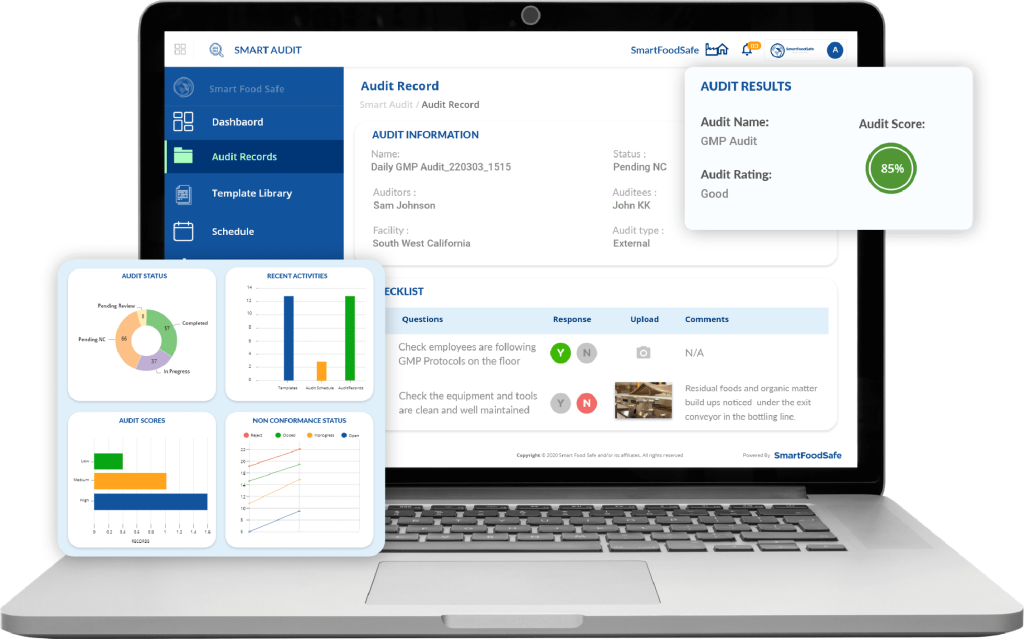
Smart Audit is a well-equipped audit management tool to reinforce an enterprise’s quality management objectives by simplifying the complexities associated with layered process audits through an organized auditing process, enabled by digital strategizing, execution, and tracking of audits.
Smart Audit provides customizable audit checklists and templates to ensure consistency across audits. It reduces manual data entry with automated audit information submission to improve accuracy, enabling auditors to perform offline audits and sync data later, ensuring data integrity even in areas with limited connectivity.
Smart Audit’s scheduling features ensure the timely execution of internal and external audits, with audit planning capabilities allowing booking audit teams in advance. Smart Audit also generates audit reports automatically to save time. Smart Audit facilitates collaboration among audit teams by providing role-based access and enabling communication within the platform. Ultimately, it tracks instances of non-compliance and generates visual insights on audit progress, findings, and compliance status to introduce informed decision-making and timely follow-up.