How Often Should Internal Audits Be Done in the Food Manufacturing Industry?
Internal audits are a cornerstone of operational excellence, regulatory compliance and product quality in manufacturing—especially in the food sector. But a key question often arises: how often should manufacturing firms conduct internal audits? The answer isn’t one-size-fits-all. It depends on your industry (food, pharma, automotive), regulatory demands, risk profile, certifications and business goals. In this article we’ll explore audit frequency in the manufacturing context, emphasising the food manufacturing industry, merge in 2025-relevant trends, and give you an actionable framework to set the right audit schedule.
Why Audit Frequency Matters
Manufacturing internal audits serve as a structured checkpoint to evaluate whether processes are effective, compliant, and continuously improving. Manufacturing internal audits help you:
Evaluate whether your processes are working as intended
Ensure compliance with internal policies, external regulations and customer requirements
Identify non-conformities, inefficiencies and opportunities for improvement
In the food manufacturing industry, audit frequency is directly linked to risk management. Frequent audits mean earlier detection of hygiene lapses, equipment calibration issues, or supplier non-conformities — all of which can have regulatory and reputational consequences.
Provide data and insights to management for decision-making and continuous improvement
In food manufacturing in particular, where hygiene, traceability, spoilage, allergen control and regulatory oversight are high, audit frequency becomes a risk-mitigation lever.
Regulatory & Certification Landscape
For many manufacturing operations (including those in food), certifications such as ISO 9001:2015, ISO 14001, ISO 45001, HACCP, GFSI requirements and other sector-specific standards set expectations around internal auditing.
ISO 9001:2015 : states that organizations shall “conduct internal audits at planned intervals” and the audit programme shall take into account the importance of the processes, changes, past performance, etc.
Importantly, ISO 9001 does not prescribe a fixed frequency (e.g., quarterly, annually) for internal audits. Instead the right frequency emerges from context, risk and performance.
In the food manufacturing industry, additional regulatory overlays (food safety, allergen controls, cold chain, packaging validation) may compel more frequent internal audit cycles than “general manufacturing.”
On top of that, emerging trends in 2025: ESG (Environmental, Social, Governance)-driven audit expectations, digital audit platforms, remote/AI-enabled auditing and data-driven risk-analysis tools are changing how audit frequency is determined and executed.
Typical Internal Audit Frequencies
While your situation dictates the schedule, many manufacturing firms adopt one of these patterns:
Quarterly audits: Common in high-risk sectors (food production with complex supply chains, pharmaceuticals, aerospace) where frequent oversight helps detect issues early and maintain tight control.
Bi-annual (twice-a-year) audits: Suitable for operations that are medium-risk, stable and have a strong performance record—but still need more than annual oversight.
Annual audits: Often used as a base minimum for general manufacturing operations (and many companies believe one full internal audit of the QMS per year satisfies standard expectations).
In the food manufacturing context, given the added risk elements (microbial control, allergen management, regulatory traceability), many organisations favour the quarterly or at least bi-annual cadence.
Why a Risk-Based, Data-Driven Approach is Better
Rather than simply picking a cycle by default, manufacturing firms benefit from moving to risk-based internal audits. Here’s how and why:
ISO 9001’s audit programme requirement calls out that audit frequency should consider process importance, changes, and previous audit results.
According to recent guidance, audits for processes with high risk (either from complexity, criticality or prior non-conformities) should be more frequent; stable low-risk processes can be audited less often.
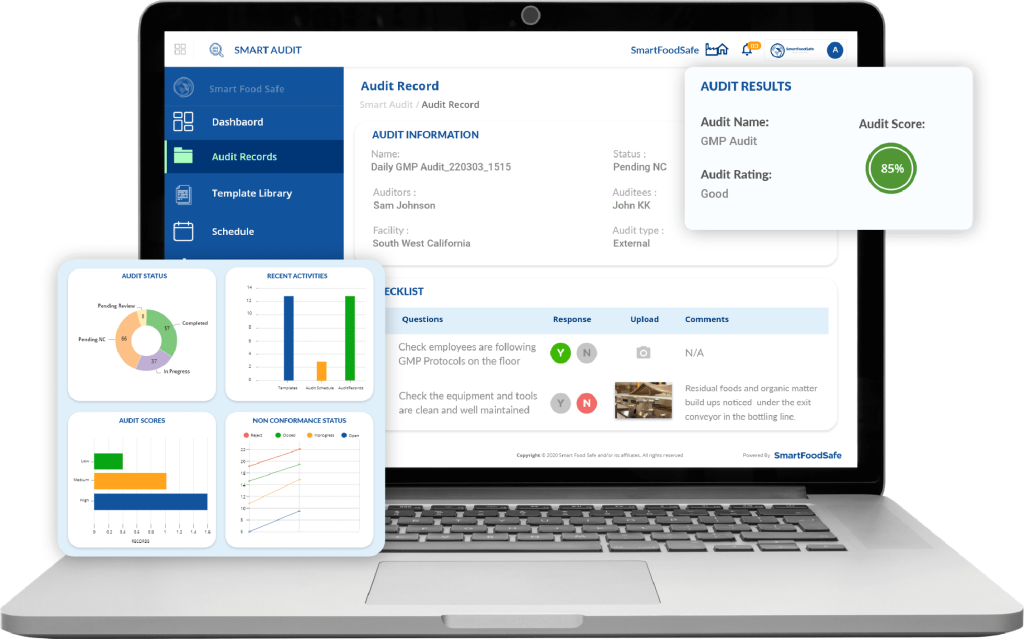
In 2025, digital audit management tools and AI-driven risk-scoring platforms allow manufacturers to dynamically adjust audit frequency. For example: Smart Audit software can analyse non-conformity trends, supplier performance, process change frequency and regulatory alerts to flag when a process should be audited more often.
This “dynamic frequency” allows manufacturing operations (especially food plants) to allocate audit resources where the risk is highest and avoid auditing low-risk zones excessively.
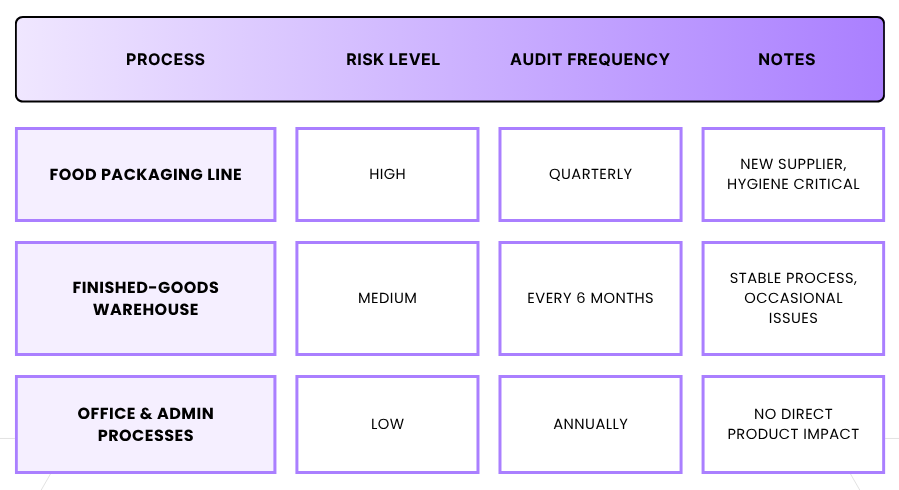
As an example: If a food-packaging line had a minor hygiene non-conformity, plus a recent change in packaging material and a supplier change, the system might trigger a “mid-cycle” audit outside the normal schedule.
How Major Manufacturers Are Evolving Audit Frequency
While specific names may vary, industry trends show that leading manufacturing firms—especially in food, pharma and automotive—are shifting from “once-a-year” audit schedules to continuous auditing models. These include:
Audit programmes that run smaller “spot audits” or “micro-audits” monthly or weekly, focusing on high-risk or newly changed processes.
Using remote digital check-lists or mobile audit apps for faster feedback loops.
Leveraging dashboards where audit findings, process KPIs, supplier quality metrics and risk indicators are pulled into one interface.
In food manufacturing plants, this means combining hygiene-checks, allergen-control audits, critical-control-point verifications and supplier audits more flexibly rather than “audit once a year in November”. This results in faster detection, more agile corrective action and improved compliance posture.
How to Determine the Right Internal Audit Frequency for Your Plant
Here’s a simple framework you can apply to your manufacturing (especially food) operation:
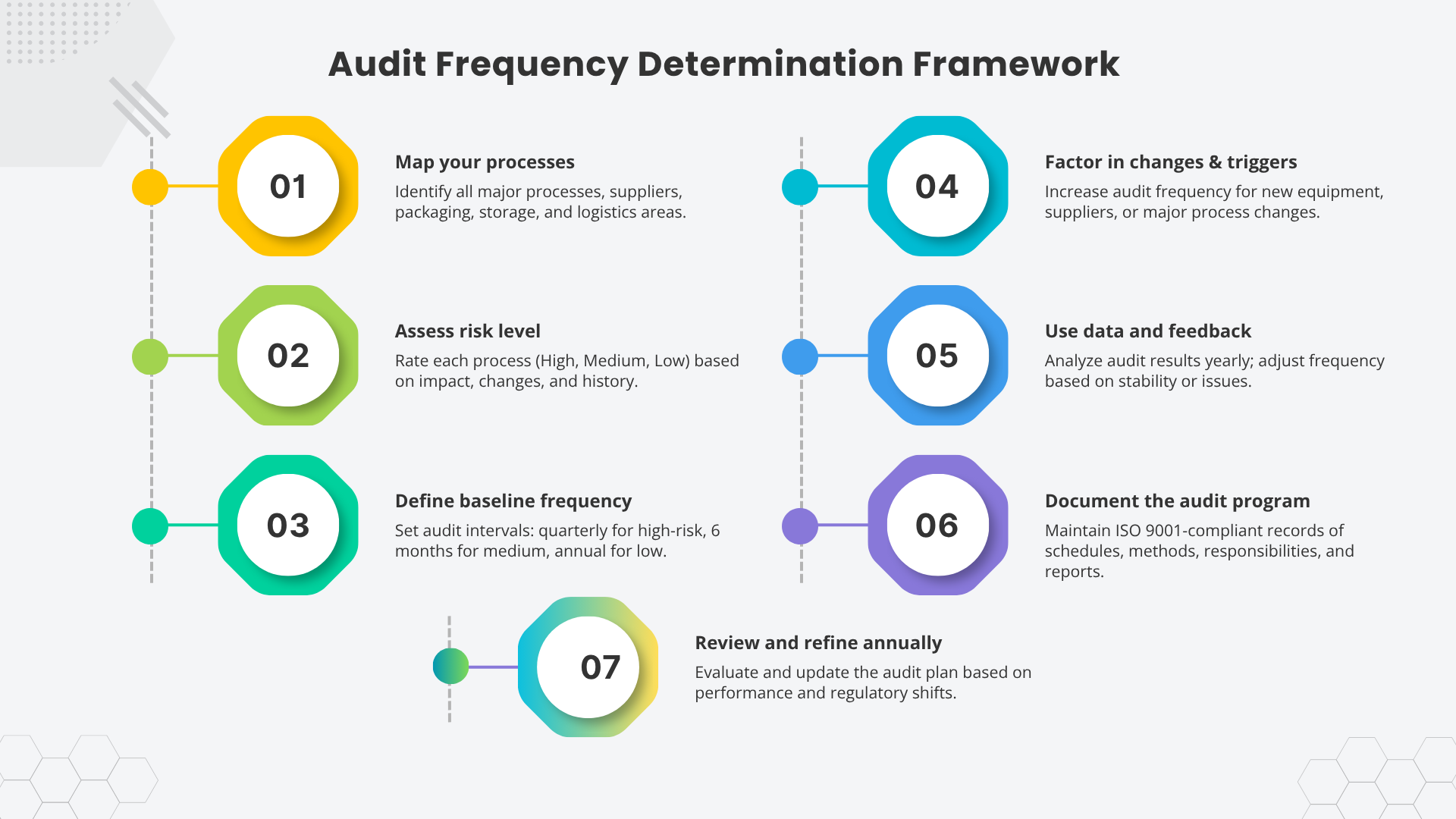
Audit Frequency Determination Framework
Map your processes – List all major manufacturing processes, sub-processes, supplier interactions, packaging, storage, logistics.
Assess risk level for each process (use a simple scale: High, Medium, Low) considering:
Frequency of changes (equipment, materials, supplier)
History of non-conformities or complaints
Regulatory or certification significance
Define baseline frequency:
High-risk: audit every 3-4 months (quarterly)
Medium-risk: audit every 6 months
Low-risk: audit every 12 months (or even longer if stable)
Factor in changes & triggers: Add more frequent audits when you have:
New equipment, new product launch or process modification
Change in regulation or standard
Supplier change or negative supplier performance
Recent serious non-conformity or corrective action
Use data and feedback: Review audit results and performance trends annually (during QMS management review) to adjust the audit schedule. If certain processes show sustained stability, you may reduce audit frequency; if they show problems, increase it.
Document the audit programme: According to ISO 9001 Clause 9.2 you need a documented audit programme that includes planned intervals, methods, responsibilities and reporting.
Review and refine annually: At your management review, evaluate if the audit programme is still appropriate for your plant’s context, regulatory changes, risk profile and performance.
Timeline Table
Internal Audit Best Practices for Manufacturing
Ensure auditors are independent and competent — don’t audit your own work.
Use process-based audit checklists (not just clause-by-clause) and incorporate digital tools for efficiency.
Leverage analytics: track non-conformities, repeat issues, supplier quality, equipment downtime — feed this into your audit scheduling.
Align audit results with corrective actions and monitor closures — fast closure is critical in food manufacturing.
Integrate your audit programme with your QMS, management review, supplier audits and external audits for a unified view.
Use audit-software or mobile apps to capture findings in real time, generate dashboards and trend analyses — this supports the “data-driven” approach.
Communicate audit findings upward to leadership and ensure they’re tied to business KPIs (product quality, safety, on-time delivery, cost of poor quality).
There’s no fixed answer like “every internal audit must be quarterly” across all manufacturing operations. What matters is a risk-based, data-driven audit programme aligned with your context — particularly in the food manufacturing industry, where product safety and regulation are heightened. Certifications like ISO 9001 :2015 don’t set a rigid timeline, but instead require you to determine a planned interval based on process importance, changes, past performance and risk. In 2025, leverage digital audit tools, analytics and automated risk-scoring to dynamically adjust your internal audit frequency. High-risk processes may need quarterly audits, while low-risk stable ones might suffice annually. The key: document your audit programme, monitor results, refine schedules and integrate audit findings into broader business improvement.Ready to simplify your audit scheduling, optimise frequency and move into continuous auditing? Explore tools such as Smart Audit or other audit-automation platforms to bring data-driven, real-time audit planning into your manufacturing environment.
Audit Management Software
Have a consistent, working internal audit strategy that continuously brings about compliance in the middle of regulatory updates with Smart Audit’s audit management features.
Have a consistent, working internal audit strategy that continuously brings about compliance in the middle of regulatory updates with Smart Audit’s audit management features.

 English
 French
 Spanish

