22 Dec 2025

Choosing the right audit management software can transform how your organisation handles compliance, risk assessment, and internal audits. With digital transformation accelerating across industries, manual audit processes are quickly becoming obsolete. The right audit management tool streamlines workflows, improves accuracy, and provides real-time visibility into your audit operations.
After extensively researching and analyzing the market, I’ve compiled a comprehensive comparison of the six best audit management tools available today. Whether you’re a small business conducting occasional audits or a large enterprise managing complex compliance requirements, this guide will help you make an informed decision.
Audit management software is a specialized platform designed to plan, execute, track, and report on audits across your organization. These tools digitize the entire audit lifecycle, from initial planning and scheduling to fieldwork execution, finding documentation, corrective action tracking, and final reporting.
Modern audit management solutions offer features like automated workflows, collaboration capabilities, customizable templates, realtime dashboards, and integration with other business systems. They help audit teams work more efficiently while maintaining compliance with industry standards and regulatory requirements.
Many organizations still manage internal, supplier, and compliance audits using spreadsheets, emails, and paperbased checklists. While these methods may work in the early stages, they quickly become a bottleneck as audit frequency, regulatory requirements, and team size grow.
Inefficiency and time loss
Manual data entry, version control issues, and repetitive followups consume hours of audit time. Instead of analyzing findings and improving processes, audit teams are stuck managing papers and chasing updates.
Lack of realtime visibility
When audit data is scattered across emails and spreadsheets, it becomes difficult to track audit progress, overdue actions, or recurring nonconformances. Leadership lacks a clear view of audit status, risks, and trends.
Higher compliance risk
Paperbased and manual audit processes increase the risk of missed deadlines, incomplete records, and inconsistent documentation, especially during regulatory or certification audits. These gaps can lead to audit findings, penalties, or failed certifications.
Limited collaboration across teams and locations
Auditors, process owners, and managers often struggle to collaborate effectively when audit information isn’t centralized. This leads to delayed corrective actions and unclear accountability.
Inconsistent audit execution
Without standardized audit workflows, checklists, and scoring methods, audit quality varies across auditors, departments, and sites, making it difficult to ensure consistent compliance.
Audit management software solves these challenges by centralizing all audit activities in a single platform. It automates audit scheduling, data capture, corrective action tracking, and reporting, giving organizations better control, visibility, and confidence in their audit processes.
Before comparing audit management tools, it’s important to understand the core features that directly impact audit efficiency, consistency, and compliance outcomes. A robust quality audit management solution should support the entire audit lifecycle, from planning to reporting, without relying on manual workarounds.
Audit planning and scheduling
Effective audit management tools should support centralized planning, calendar-based scheduling, resource allocation, and risk-based audit planning. This ensures audits are conducted on time and aligned with organizational priorities.
Customizable audit templates
Prebuilt and customizable audit checklists, questionnaires, and forms help standardize audits while allowing flexibility for different standards, locations, or processes. This improves audit consistency and reduces preparation time.
Mobile and offline audit execution
Mobile accessibility allows auditors to conduct field audits using tablets or smartphones. Offline functionality is critical for sites with limited connectivity, ensuring audits continue without data loss.
Centralized document management
A single repository for audit evidence, findings, and supporting documents improves traceability and reduces the risk of missing or outdated records during compliance audits.
Automated workflows and notifications
Workflow automation enables automatic task assignments, reminders, approvals, and corrective action tracking. This reduces followup delays and keeps audits moving forward.
Realtime collaboration
Multiple users should be able to work on audits simultaneously, ensuring auditors, process owners, and managers stay aligned throughout the audit process.
Inapp communication and feedback
Commenting and feedback tied directly to audit findings improve clarity, reduce email dependency, and accelerate issue resolution.
Secure stakeholder access
Role based portals allow auditees and management to review findings, upload evidence, and track corrective actions, without compromising data security.
Customizable dashboards and KPIs
Dashboards should provide real-time visibility into audit status, nonconformances, corrective actions, and key performance indicators across teams and locations.
Automated audit reporting
The ability to generate professional audit reports automatically saves time and ensures consistent formatting and data accuracy.
Trend and root cause analysis
Historical audit data should be easily accessible for trend analysis, helping organizations identify recurring issues and drive continuous improvement.
Comprehensive audit trails
A complete log of actions, changes, and approvals is essential for accountability, traceability, and regulatory inspections.
Standards and regulatory support
Audit management tools should support major standards such as ISO (9001, 22000, 27001), SOC, GDPR, and relevant industry-specific frameworks, ensuring alignment with compliance requirements.
Smart Audit stands out as the most comprehensive and user-friendly audit management platform available today. Having tested numerous solutions, I can confidently say Smart Audit strikes the perfect balance between powerful functionality and ease of use.
Why Smart Audit Ranks #1
Intuitive User Interface : Unlike many audit tools that require extensive training, Smart Audit features an incredibly intuitive interface that teams can start using productively within hours. The clean design eliminates unnecessary complexity while providing quick access to all essential features.
Comprehensive Feature Set : Smart Audit doesn’t force you to choose between breadth and depth. The platform covers every aspect of audit management including internal audits, external audits, vendor audits, safety audits, quality audits, compliance audits, and operational audits.
MobileFirst Design : The Smart Audit mobile app is genuinely excellent, not just an afterthought. Auditors can conduct complete field audits offline, capture photos and signatures, and sync everything automatically when connectivity returns. This is game changing for organizations conducting site visits or facility inspections.
Customization Without Coding : Smart Audit allows you to create custom audit templates, workflows, and reports through an intuitive drag and drop interface. You don’t need IT support or programming knowledge to adapt the system to your specific needs.
RealTime Collaboration : Multiple team members can work on the same audit simultaneously, with changes reflected instantly. The commenting system keeps all communication organized and tied to specific audit items, eliminating endless email chains.
Audit Scheduling
Plan audits using a risk based approach with automated reminders to ensure audits are conducted on time and without manual followups.
Advanced Audit Analytics
Gain real time visibility through interactive dashboards that track audit completion rates, recurring findings, and corrective action progress across teams and locations.
Integrated CAPA Management
Manage corrective and preventive actions efficiently with automated workflows that assign responsibilities, track deadlines, and ensure closure of audit findings.
MultiLanguage Audit Support
Conduct audits in multiple languages to support global teams and ensure consistency across regions without translation gaps.
Photo Based Evidence Capture
Capture, annotate, and attach photos directly within audit checklists to strengthen evidence, improve clarity, and reduce disputes.
Automated Reporting
Generate professional, PDF audit reports automatically eliminating manual formatting and accelerating audit reporting.
NC Management
Identify, track, and address instances of noncompliance, facilitating timely resolution and risk mitigation.
Audit Scores and Rating
Assess and quantify audit results, providing a structured evaluation of compliances levels and performance.
Offline Auditing
Perform audits offline in areas with limited or remote connectivity by using the smart Audit’s auditing capability.
Book Demo for Pricing Details and Know More About Product Features
Best For :
Smart Audit is ideal for organizations of all sizes across industries including manufacturing, healthcare, food service, retail, construction, logistics, hospitality, and professional services. It’s particularly well suited for companies wanting a modern, comprehensive solution without unnecessary complexity.
Pros
Audit Board is a comprehensive governance, risk, and compliance (GRC) platform with robust audit management capabilities. It’s designed for larger organizations with complex audit needs and substantial budgets.
Key Features
Best For
Large enterprises with mature audit functions, particularly those needing integrated GRC capabilities across internal audit, compliance, and risk management.
Pros
Cons
Safety Culture, formerly known as iAuditor, specializes in safety inspections and operational audits. It’s particularly popular in industries like construction, manufacturing, and hospitality.
Key Features
Pricing
Safety Culture offers tiered pricing starting with a free plan for basic use, with premium plans adding advanced features, user management, and integrations.
Best For
Organizations focused primarily on safety inspections, facility walkthroughs, and operational checklists rather than formal compliance audits.
Pros
Cons
Master Control is a quality management system (QMS) with comprehensive audit management modules. It’s particularly strong in highly regulated industries like pharmaceuticals, medical devices, and biotechnology.
Key Features
Pricing
Enterpriselevel pricing with significant implementation costs. Custom quotes based on company size, industry, and required modules.
Best For
Life sciences, medical device, and pharmaceutical companies require FDA compliance and integrated quality management systems.
Pros
Cons
Onspring is a flexible, no code platform that can be configured for audit management alongside other GRC functions. It appeals to organizations wanting maximum customization capability.
Key Features
Pricing
Midrange pricing with costs varying based on users, modules, and support level. Implementation services typically required for optimal configuration.
Best For
Organizations with unique audit processes want to build custom workflows without relying on IT development resources.
Pros
Cons
Resolver provides an integrated risk management platform with strong audit management capabilities. It connects audit activities directly to enterprise risk data.
Key Features
Pricing
Enterprise pricing with custom quotes. Significant investment required for platform licensing and implementation.
Best For
Mid to large organizations wanting tight integration between risk management and audit activities, particularly in financial services and insurance.
Pros
Cons
Selecting the best audit management software for your organization requires careful consideration of several factors:
Simple audit needs : If you primarily conduct straightforward inspections, checklists, or basic compliance audits, solutions like Smart Audit or Safety Culture offer excellent functionality without unnecessary complexity.
Complex audit requirements : Organisations managing multi-phase audits, intricate finding classifications, or sophisticated corrective action workflows may benefit from the deeper capabilities of Smart Audit’s enterprise features or platforms like Audit Board.
Different industries have unique audit demands:
Highly regulated industries (pharma, medical devices) : Need specialised compliance features, validated systems, and regulatory submission support
Manufacturing and construction : Require strong safety audit capabilities with excellent mobile functionality
General business : Can leverage flexible, user-friendly platforms that cover standard audit types
The best software is the one your team actually uses. Consider:
Ease of use : How quickly can auditors become productive?
Mobile experience : Do field auditors need offline capabilities?
Training requirements : How much training time is realistic for your team?
Change management : Is your organization ready for significant process changes?
Look beyond initial licensing costs to understand the complete picture:
Smart Audit offers exceptional value with transparent pricing, including training and support, and minimal implementation costs compared to enterprise platforms requiring lengthy consulting engagements.
Choose a platform that can grow with your organization. Consider:
Can it handle increasing audit volumes?
Does it support expanding to new locations or business units?
Can you add new audit types as requirements evolve?
Are advanced features available when you need them?
Selecting the right audit management tool significantly impacts your organisation’s audit effectiveness, compliance posture, and operational efficiency. After comparing the top options, here’s our recommendation
For most organizations, Smart Audit provides the best overall value. It combines comprehensive functionality, exceptional ease of use, powerful mobile capabilities, and competitive pricing. Whether you’re a growing business establishing your audit program or an established organization modernizing outdated processes, Smart Audit delivers the features you need without unnecessary complexity.
The audit management software landscape offers excellent options across various needs and budgets. Investing in the right audit management tool transforms auditing from a compliance burden into a strategic advantage, providing visibility, improving quality, and ultimately reducing risk across your organization.
Ready to transform your audit program? Book Demo with Smart Audits
Implementation timelines vary dramatically. Simple solutions like Smart Audit can be operational in 12 weeks with basic configuration. Enterprise platforms may require 312 months including extensive customization, integration, and validation. Most midsized organizations can successfully implement Smart Audit within a month.
Quality mobile apps, including Smart Audit’s, offer full offline functionality. Auditors can complete entire audits without connectivity, with automatic synchronization once online. This is essential for field audits in areas with limited or no internet access.
Most platforms support data migration from spreadsheets, legacy systems, or paper records. Focus on migrating recent audits and active corrective actions. Vendors typically provide migration services or guidance. Smart Audit’s team assists with data migration during implementation.
Pricing varies widely. Simple inspection tools start around $2050 per user monthly. Comprehensive solutions like Smart Audit offer competitive midmarket pricing. Enterprise platforms can cost hundreds of thousands annually. Always calculate total cost of ownership including implementation, training, and support.
Successful adoption requires a combination of selecting user-friendly software, providing adequate training, establishing clear processes, demonstrating value to end users, and maintaining executive sponsorship. Smart Audit’s intuitive interface significantly reduces adoption challenges compared to complex enterprise systems.
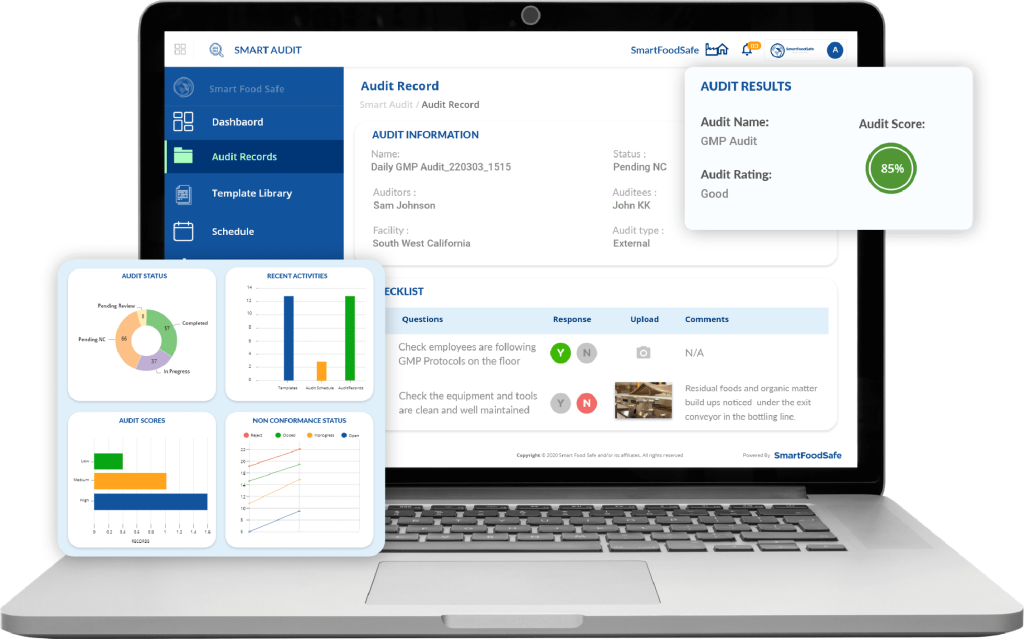
Have a consistent, working internal audit strategy that continuously brings about compliance in the middle of regulatory updates with Smart Audit’s audit management features.
Have a consistent, working internal audit strategy that continuously brings about compliance in the middle of regulatory updates with Smart Audit’s audit management features.
Signup to receive latest news, insights and updates on audits management

 English
 French
 Spanish

