SMART AUDIT

How to choose right Audit Management software A Complete Guide for 2026

04 Dec 2025

Audit management software Smart Audit

Are you still managing audits with spreadsheets, email chains, and paper checklists? If so, you’re not alone, but you’re also leaving efficiency, accuracy, and cost savings on the table. In 2026, organisations that have embraced audit management software are completing audits up to 70% faster while reducing errors and improving compliance outcomes.

Whether you are conducting internal audits, preparing for external compliance reviews, or managing supplier quality assessments, the right audit management software can transform your audit process from a dreaded administrative burden into a strategic advantage.

This comprehensive guide will walk you through everything you need to know about audit management software—from core features and benefits to implementation strategies and cost considerations. By the end, you’ll know exactly how to choose and implement the right solution for your organization.

What Is Audit Management Software?

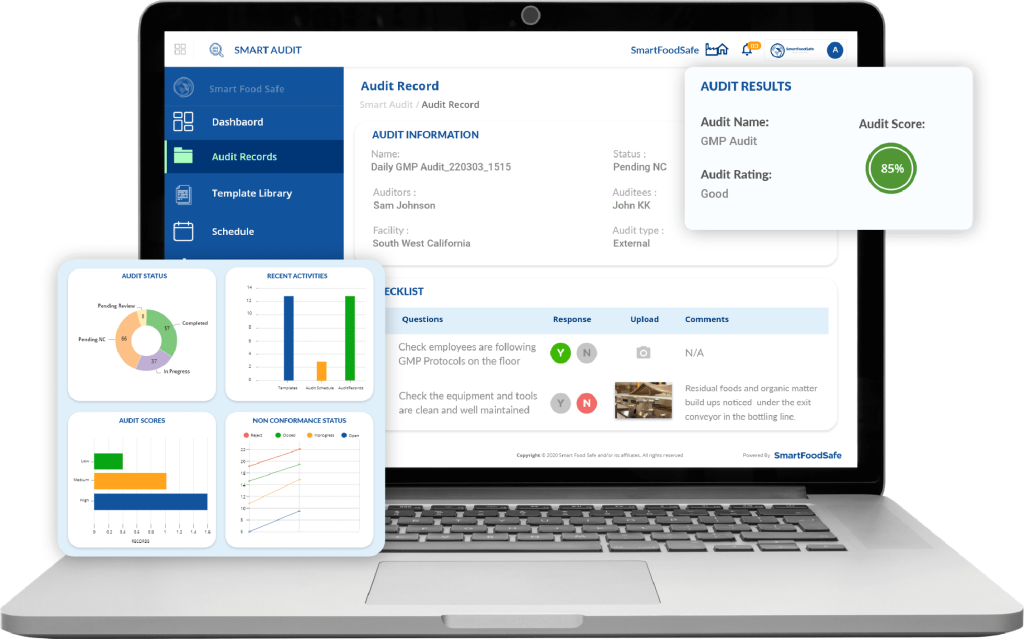
Audit management software is a specialised platform designed to plan, execute, track, and report on audits throughout their entire lifecycle. Rather than relying on disconnected tools like spreadsheets, email, and paper forms, audit management software centralises all audit activities in one secure, accessible system.

These platforms automate manual processes, standardise audit procedures, and provide real-time visibility into audit status, findings, and corrective actions. Modern audit management software typically operates in the cloud, making it accessible from anywhere and enabling seamless collaboration between auditors, stakeholders, and external parties.

How Audit Management Software Works

The typical audit management workflow includes several key stages: 

how audit mangement software works

Planning and Scheduling : The software helps create risk-based audit plans, schedule audits across multiple locations, assign resources, and establish timelines based on regulatory requirements and organizational priorities.

Preparation : Auditors can access standardized templates, checklists, and previous audit documentation. The system automatically notifies relevant stakeholders and ensures all necessary documents are available.

Execution : During the audit, teams can capture findings in real-time using mobile devices, attach photos and documents as evidence, and collaborate with team members. Offline capabilities ensure audits can continue even without internet connectivity.

Reporting : The software automatically generates comprehensive audit reports with customizable formats, visual dashboards, and executive summaries. Reports can be instantly shared with stakeholders.

Follow-up and Remediation : Track corrective action plans, monitor remediation progress, set automated reminders, and close out audit findings once issues are resolved.

Analysis and Improvement : Advanced analytics identify trends across multiple audits, highlight recurring issues, and provide insights for continuous improvement.

Essential Features of Audit Management Software

Not all audit management solutions are created equal. When evaluating options, look for these essential capabilities:

1. Audit Planning and Scheduling

Risk-based audit planning tools help prioritize audits based on organizational risk factors, regulatory requirements, and historical performance. Automated scheduling features ensure audits occur on time and resources are allocated efficiently. The system should support:

  • Multi audit planning like weekly, monthly, quarterly, half yearly and yearly.
  • Automated notifications and reminders
  • Flexible scheduling for recurring and ad-hoc audits

2. Customizable Templates and Checklists

Pre-built templates for common audit types (ISO 27001, Compliance Audits, Food safety audits, ) save time and ensure consistency. However, your organization should be able to customize these templates or create entirely new ones to match your specific processes and requirements.

Key capabilities include:

  • Drag-and-drop template builders
  • Question libraries with conditional logic
  • Support for multiple question types (yes/no, multiple choice, text, numeric, photo capture)
  • Version control for templates
  • Template sharing across the organization

3. Mobile Accessibility

Modern audits often occur in the field, on manufacturing floors, at retail locations, or at supplier facilities. Mobile apps enable auditors to:

  • Complete audits on smartphones or tablets
  • Capture photos and videos as evidence
  • Work offline and sync when connectivity returns
  • Access real-time checklists and guidelines
  • Digitally sign off on completed audits

4. Collaboration and Workflow Management

Audits involve multiple stakeholders, auditors, department managers, executives, and external parties.
Effective collaboration features include:

  • Role-based access controls
  • Task assignment and tracking
  • Comment threads and annotations
  • Real-time notifications
  • Document sharing and version control
  • Audit trail of all actions and changes

5. Finding and Issue Management

Comprehensive tracking of audit findings, non-conformances, and improvement opportunities with:

  • Severity classification (critical, high, medium, low)
  • Root cause analysis templates
  • Corrective action plan creation and assignment
  • Automated escalation for overdue items
  • Link findings to specific controls or requirements

6. Compliance Framework Mapping

For organisations managing multiple compliance requirements, framework mapping is essential:

  • Pre-built control libraries (SOX, ISO 27001, SOC 2, HIPAA, GDPR, PCI DSS)
  • Map controls across multiple frameworks
  • Gap analysis tools
  • Compliance status dashboards
  • Audit readiness assessments

7. Advanced Reporting and Analytics

Transform audit data into actionable insights with:

  • Customizable report templates
  • One-click report generation
  • Executive dashboards with key metrics
  • Trend analysis across multiple audits
  • Heat maps showing high-risk areas
  • Export capabilities (PDF, Excel, Word)
  • Scheduled report distribution

8. Integration Capabilities

Your audit management software shouldn’t operate in isolation. Look for:

  • RESTful APIs for custom integrations
  • Pre-built connectors for common platforms
  • SSO (Single Sign-On) support
  • Data import/export functionality
  • Webhook support for real-time updates

9. Security and Compliance

Since audit data is sensitive, security features are non-negotiable:

  • SOC 2 Type II certification
  • Data encryption at rest and in transit
  • Role-based access controls (RBAC)
  • Multi-factor authentication (MFA)
  • Complete audit trails
  • Data residency options
  • Regular security assessments

Key Benefits of Audit Management Software

Organizations implementing audit management software typically experience significant improvements across multiple dimensions:

1. Dramatic Time Savings

Manual audit processes are time-consuming. Audit management software reduces audit cycle time by 40–70% through:

  • Automated scheduling and notifications
  • Pre-populated templates and checklists
  • Elimination of manual data entry
  • Automated report generation
  • Streamlined approval workflows

Organizations report reducing audit completion time from 4 weeks to just 1–2 weeks, freeing up auditor time for higher-value activities.

2. Improved Accuracy and Consistency

Standardized templates and automated data collection dramatically reduce errors. Benefits include:

  • Elimination of transcription errors
  • Consistent application of audit criteria
  • Reduced risk of missed audit steps
  • Automatic calculations and validations
  • Version-controlled procedures

3. Enhanced Compliance and Risk Management

Stay ahead of regulatory requirements and identify risks proactively:

  • Real-time compliance status visibility
  • Automated compliance gap analysis
  • Early warning of potential issues
  • Comprehensive audit trails for regulators
  • Reduced compliance violations and associated fines

4. Better Collaboration and Communication

Break down silos and improve cross-functional teamwork:

  • Centralized communication hub
  • Clear task ownership and accountability
  • Real-time status updates
  • Reduced email overload
  • Improved stakeholder engagement

5. Cost Reduction

While audit management software requires an upfront investment, it delivers significant ROI through:

  • Reduced labor costs (fewer hours per audit)
  • Elimination of paper and printing costs
  • Fewer compliance violations and fines
  • Reduced external audit fees (due to better preparation)
  • Lower risk of costly incidents and recalls

Organisations see 200–300% ROI within the first year, with many achieving payback in 6–9 months.

6. Improved Audit Preparedness

Be constantly ready for external audits and regulatory inspections:

  • Instant access to historical audit records
  • Up-to-date compliance documentation
  • Clear evidence of continuous improvement
  • Pre-audit self-assessments
  • Confidence during external audits

7. Scalability

As your organization grows, audit management software scales effortlessly:

  • Add new locations without adding administrative burden
  • Support growing audit team
  • Handle increasing audit frequency
  • Manage more complex compliance requirements
  • Expand to new audit types and frameworks

Industries That Benefit from Audit Management Software

While any organization conducting audits can benefit, certain industries find audit management software particularly valuable:

Manufacturing and Quality Assurance

Manufacturing organizations use audit management software to conduct quality audits, supplier assessments, ISO compliance audits, and safety inspections. Key benefits include:

  • ISO 9001, AS9100, IATF 16949 compliance
  • Supplier quality management
  • Process audits and 5S inspections
  • Equipment calibration tracking
  • Root cause analysis and CAPA management

Healthcare and Life Sciences

Healthcare organizations face rigorous regulatory requirements and frequent audits. Audit management software helps with:

  • Joint Commission readiness
  • Clinical quality audits
  • Pharmacy audits
  • FDA 21 CFR Part 11 compliance
  • Medical device quality management (ISO 13485)

Food safety is paramount, making audit management critical:

  • HACCP compliance
  • FDA Food Safety Modernization Act (FSMA)
  • Global Food Safety Initiative (GFSI) standards
  • Restaurant and facility inspections
  • Supplier audits
  • Quality control checks

Retail and Hospitality

Multi-location retail and hospitality organizations benefit from:

  • Store operations audits
  • Brand standards compliance
  • Loss prevention audits
  • Customer experience assessments
  • Franchise compliance monitoring
  • Health and safety inspections

Construction and Engineering

Construction firms manage complex safety and quality requirements:

  • OSHA compliance audits
  • Safety inspections
  • Quality control inspections
  • Project milestone audits
  • Environmental compliance (ISO 14001)
  • Subcontractor assessments

How to Choose the Right Audit Management Software

Selecting audit management software is a significant decision. Follow this framework to make the right choice:


Step 1: Define Your Requirements

Start by documenting your specific needs:
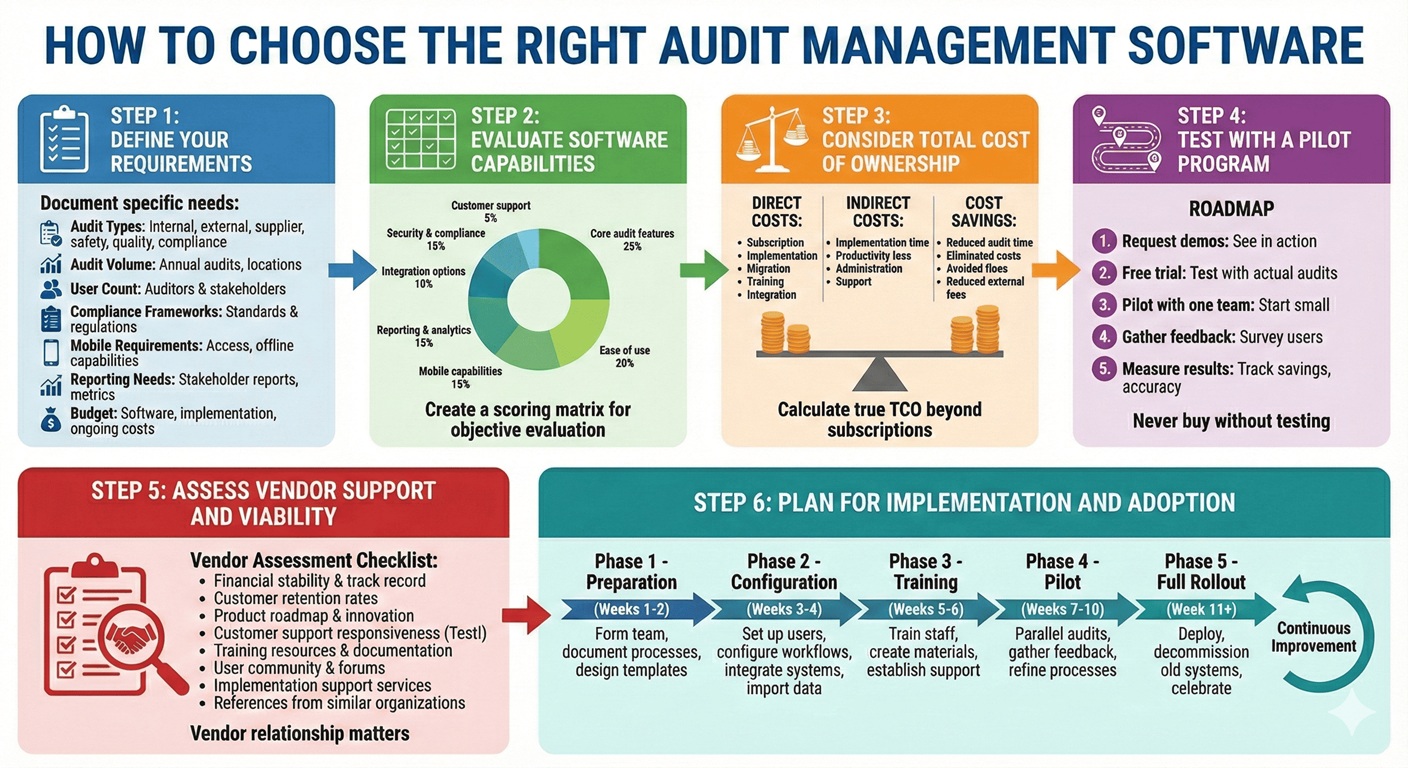
Audit Types : What types of audits do you conduct? (internal, external, supplier, safety, quality, compliance)

Audit Volume : How many audits do you perform annually? How many locations?

User Count : How many auditors and stakeholders need access?

Compliance Frameworks : Which standards and regulations must you comply   with?

Mobile Requirements : Do auditors need mobile access? Offline capabilities?

Reporting Needs : What reports and metrics do stakeholders require?

Budget : What is your budget for software, implementation, and ongoing costs?

Step 2: Evaluate Software Capabilities

Create a scoring matrix to objectively evaluate options:

Here is the Example for evaluating.

Core audit features

25% 

Ease of use 

20%

Mobile capabilities

15%

Reporting & analytics 

15%

Integration options 

10%

Security & compliance 

10%

Customer support

  5%

Step 3: Consider Total Cost of Ownership

Look beyond subscription fees to calculate true TCO:

Direct Costs :

  • Software subscription fees

  • Implementation and setup costs

  • Data migration expenses

  • Training costs

  • Integration development

Indirect Costs:

  • Time spent on implementation

  • Productivity loss during transition

  • Ongoing administration time

  • Support and maintenance

Cost Savings :

  • Reduced audit time

  • Eliminated software and paper costs

  • Avoided compliance fines

  • Reduced external audit fees

Step 4: Test with a Pilot Program

Never buy enterprise software without testing it first:

1.  Request demos : See the software in action with your use cases

2.  Free trial : Test with actual audits (most vendors offer 14-30 day trials)

3.  Pilot with one team : Start small with a single audit team or location

4.  Gather feedback : Survey users on usability and effectiveness

5.  Measure results : Track time savings, error reduction, and user satisfaction


Step 5: Assess Vendor Support and Viability

Your relationship with the vendor matters as much as the software:

  •  Vendor Assessment Checklist :

  •   Financial stability and track record

  •   Customer retention rates

  •   Product roadmap and innovation

  •   Customer support responsiveness (test it during evaluation)

  •   Training resources and documentation

  •   User community and forums

  •   Implementation support services

  •   References from similar organizations

Step 6: Plan for Implementation and Adoption

Create a detailed implementation plan:

Phase 1 – Preparation (Weeks 1-2) :

– Form implementation team

– Document current audit processes

– Design templates and checklists

 Phase 2 – Configuration (Weeks 3-4) :

  • Set up user accounts and permissions

  • Configure templates and workflows

  • Integrate with existing systems

  • Import historical data

 Phase 3 – Training (Weeks 5-6) :

  • Train administrators

  • Train auditors and users

  • Create training materials

  • Establish support procedures

 Phase 4 – Pilot (Weeks 7-10) :

  • Run parallel audits (old and new system)

  • Gather feedback and optimize

  • Refine processes

  • Document lessons learned

 Phase 5 – Full Rollout (Week 11+) :

  • Deploy to all users

  • Decommission old systems

  • Celebrate wins

  • Continuous improvement

Implementation Best Practices

Successful implementations follow these proven practices:

1. Secure Executive Sponsorship

Executive support is critical for successful adoption. Ensure leadership:

– Understands the strategic value

– Communicates importance to the organization

– Allocates adequate resources

– Removes organizational barriers

– Celebrates early wins

2. Start Small and Scale

Resist the urge to deploy everything at once:

– Begin with one audit type or location

– Perfect the process before scaling

– Learn from early users

– Build confidence and expertise

– Scale progressively based on success

3. Involve End Users Early

Your auditors will make or break adoption:

– Include auditors in software selection

– Solicit feedback on templates and workflows

– Designate “champions” to advocate for the system

– Address concerns proactively

– Recognize and reward early adopters

4. Invest in Change Management

Technology is the easy part; changing behaviors is hard:

– Communicate “why” not just “what”

– Explain benefits to different stakeholder groups

– Address “what’s in it for me?”

– Provide ample training and support

– Be patient with the learning curve

 5. Clean Up Data Before Migration

Garbage in, garbage out applies to audit data:

– Archive outdated audit records

– Standardize naming conventions

– Consolidate duplicate records

– Validate data accuracy

– Document what gets migrated and what doesn’t

 6. Optimize Processes During Implementation

Don’t just digitize broken processes:

– Map current state processes

– Identify inefficiencies and bottlenecks

– Design improved future state processes

– Leverage software capabilities to optimize

– Document new standard operating procedures

 7. Provide Comprehensive Training

Different users need different training:

– Administrators: deep technical training

– Auditors: hands-on practical training

– Managers: reporting and analytics training

– Executives: dashboard and insights training

– Create job aids and quick reference guides

8. Measure and Communicate Success

Track metrics to demonstrate value:

– Time savings per audit

– Error reduction rates

– User adoption rates

– Compliance improvements

– Cost savings achieved

– Share success stories internally
Future Trends in Audit Management Software

The audit management software landscape continues to evolve rapidly. Here are key trends shaping the future:

1. Artificial Intelligence and Machine Learning

AI is transforming audit management in several ways:

Predictive Analytics : ML algorithms analyze historical audit data to predict where future issues are likely to occur, enabling proactive auditing of high-risk areas.

Automated Evidence Analysis : AI can review thousands of documents, screenshots, and logs to automatically identify relevant evidence and anomalies, dramatically reducing manual review time.

Intelligent Recommendations : AI suggests corrective actions based on similar issues in past audits and industry best practices.

Natural Language Processing : Auditors can use conversational interfaces to query audit data and generate reports using plain language.

Anomaly Detection : ML algorithms continuously monitor control data to flag unusual patterns that may indicate control failures or fraud.

2. Continuous Auditing and Monitoring

The shift from periodic audits to continuous assurance:

Real-time Control Monitoring : Instead of quarterly audits, systems continuously monitor control effectiveness and alert auditors to deviations immediately.

Automated Testing : Routine control tests run automatically without auditor intervention, freeing auditors for higher-value work.

Dynamic Risk Assessment : Risk scores update in real-time based on emerging threats, business changes, and control performance.

Always Audit-Ready : Organizations maintain perpetual audit readiness rather than scrambling before scheduled audits.

3. Enhanced Mobile and Remote Capabilities

Mobile capabilities are becoming more sophisticated:

Augmented Reality : AR-enabled audits overlay digital checklists and instructions onto physical environments through smartphone cameras.

Voice-Activated Auditing : Hands-free audit data capture using voice commands, especially useful in manufacturing and field environments.

Wearable Integration : Smart glasses and other wearables enable truly hands-free auditing while maintaining safety.

Remote Collaboration : Virtual audits with video conferencing, screen sharing, and collaborative documentation built into the platform.

5. Blockchain for Audit Trails

Immutable audit evidence and traceability:

Tamper-Proof Records : Blockchain technology ensures audit evidence and findings cannot be altered after creation.

Enhanced Trust : Regulators and external auditors have greater confidence in audit data integrity.

Smart Contracts : Automatically trigger remediation workflows and escalations based on predetermined conditions.

6. Integrated GRC Platforms

Audit management is merging with broader GRC capabilities:

Unified Risk View : Connect audit findings with enterprise risk registers and compliance programs.

Three Lines of Defense Model : Coordinate activities across operational management, risk/compliance functions, and internal audit.

Holistic Governance : Link board governance, strategic planning, and operational auditing in one platform.

7. Enhanced Data Analytics and Visualization

Making audit data more accessible and actionable:

Interactive Dashboards : Drill down from executive summaries to detailed findings with a few clicks.

Predictive Modeling : Forecast future compliance posture and resource needs based on trends.

Benchmarking : Compare your audit performance against industry peers.

Data Storytelling : Automatically generate narrative explanations of audit data trends and insights.

Conclusion

Audit management software has evolved from a nice-to-have convenience to a strategic necessity for organizations serious about compliance, risk management, and operational excellence. The benefits—dramatic time savings, improved accuracy, enhanced compliance, better insights, and significant cost reduction—make a compelling case for modernizing your audit processes.

The key is choosing the right solution for your specific needs and ensuring successful implementation and adoption. Start by clearly defining your requirements, involve stakeholders early in the selection process, test thoroughly before committing, and plan for comprehensive change management.

Whether you’re conducting quality audits in manufacturing, compliance audits in healthcare, security audits in technology, or safety inspections in construction, there’s an audit management solution designed for your industry and use cases.

 Ready to transform your audit process?  

Take these immediate next steps:

  1. Assess your current audit process : Document pain points, time spent, and costs
  2. Define your requirements : Use the framework in this guide to clarify your needs
  3. Research vendors : Shortlist 3-5 platforms that align with your requirements
  4. Request demos : See the software in action with your specific use cases
  5. Start a pilot : Test your top choice with a small team before full deployment

The organizations achieving the greatest success with audit management software are those that view it not just as a software purchase, but as a strategic initiative to transform how they manage risk, ensure compliance, and drive continuous improvement.

Your path to audit excellence starts today. 

Looking for a modern, user-friendly audit management solution? Learn how Smart Audits can streamline your audit processes, improve compliance, and deliver measurable ROI in weeks, not months. Request a free demo today

Frequently Asked Questions

While there is some overlap, they serve different primary purposes. Audit management software focuses specifically on planning, conducting, and reporting on audits—whether internal, external, supplier, or compliance audits. Quality management software (QMS) has a broader scope, managing overall quality processes including document control, training, change management, CAPA, and audits. Many modern QMS platforms include audit management as one module among many. Organizations primarily focused on audit activities typically choose dedicated audit management software, while those needing comprehensive quality management select a QMS with strong audit capabilities.

Yes, most modern audit management platforms offer offline mobile capabilities. Auditors can download audit templates and checklists to their mobile devices, conduct audits without internet connectivity (common in manufacturing plants, remote locations, or areas with poor connectivity), and automatically sync all data once connectivity is restored. This ensures audits can proceed uninterrupted regardless of internet availability. When evaluating solutions, specifically test offline functionality as implementation quality varies between vendors.

Implementation timelines vary significantly based on organizational complexity, existing processes, data migration needs, and customization requirements. Simple implementations for small teams using standard templates can be completed in 2-4 weeks. Mid-sized organizations with moderate customization typically require 6-12 weeks. Large enterprises with complex requirements, extensive integrations, and global deployments may need 3-6 months. Vendors offering rapid deployment methodologies, pre-built templates, and strong implementation support can significantly accelerate timelines. Plan for a pilot phase before full deployment to identify and resolve issues before organization-wide rollout.

Integration capabilities vary widely between platforms. Enterprise-grade solutions typically offer robust integration options including RESTful APIs for custom integrations, pre-built connectors for common platforms like ERP, CRM, and HRIS systems, webhook support for real-time data synchronization, SCIM provisioning for user management, and SSO support for authentication. During evaluation, provide vendors with a list of systems requiring integration and request demonstrations of actual integration functionality. Some vendors offer integration marketplaces or partner with SaaS platforms to simplify connections to hundreds of applications.

Organizations typically achieve 300-500% ROI over three years, with many reaching payback within 6-12 months. Primary ROI drivers include reduced audit cycle time (40-70% reduction), decreased labor costs as audits require fewer hours, eliminated paper and manual process costs, reduced compliance violations and associated fines, lower external audit fees due to better preparation, and improved audit quality catching issues earlier. Calculate your specific ROI by measuring current audit costs (labor hours, materials, compliance issues), estimating time savings percentages, and factoring in software costs including subscription, implementation, and training.

Modern cloud-based audit management platforms are designed for business user administration, requiring minimal IT involvement for day-to-day operations. You’ll need IT support during initial implementation for integrations and SSO setup, but ongoing administration—including creating audit templates, managing users, generating reports, and configuring workflows—is typically handled by business administrators with provided training. Look for solutions with intuitive administrative interfaces, comprehensive documentation and training, and responsive vendor support to minimize IT dependency. Organizations with complex custom integrations or specific security requirements may need occasional IT involvement for advanced scenarios.

Absolutely. While enterprise organizations with large audit teams see substantial benefits, small businesses conducting even a few audits annually can realize value through time savings, improved consistency, better documentation, enhanced compliance, and professional presentation. Many vendors offer affordable plans designed specifically for small businesses, with simplified features, lower user counts, and reasonable pricing (often $500-$2,000/month). Some platforms offer free plans with basic capabilities suitable for very small teams. Small businesses should focus on solutions with quick implementation, minimal training requirements, and excellent support rather than complex enterprise features they don’t need.

Audit Management Software

Have a consistent, working internal audit strategy that continuously brings about compliance in the middle of regulatory updates with Smart Audit’s audit management features.

Audit Management Software

Have a consistent, working internal audit strategy that continuously brings about compliance in the middle of regulatory updates with Smart Audit’s audit management features.