English
 French
 Spanish


In the high-stakes world of manufacturing, operational risk management is the backbone of ensuring smooth production, regulatory compliance, and business resilience. From supply chain disruptions in automotive plants to equipment failures in pharmaceutical facilities, operational risks can derail efficiency and profitability. In 2025, with regulations like ISO 31000 and global supply chain complexities intensifying, manufacturers must adopt robust strategies to identify, assess, and mitigate risks. This blog, crafted by industry experts, explores how digital tools like Smart Audit can transform operational risk management in manufacturing, ensuring compliance and operational excellence. Download our free Operational Risk Assessment Template to get started!
What is Operational Risk Management?
Operational risk management (ORM) is the process of identifying, assessing, prioritising, and mitigating risks that arise from internal processes, systems, people, or external events in an organisation. In manufacturing, this includes risks like production downtime, supplier failures, safety violations, or cyber-security breaches. Effective ORM ensures compliance with standards like ISO 9001, OSHA, or GMP while minimising disruptions and costs.
For example, an aerospace manufacturer might manage risks related to supplier part defects, while a food processing plant focuses on contamination risks. Digital tools now play a pivotal role, offering real-time insights and automation to streamline ORM across complex manufacturing environments.
Why Operational Risk Management Matters in Manufacturing
In 2025, manufacturing faces unprecedented challenges, global supply chain volatility, stricter regulations, and rising cyber threats. Failing to manage operational risks can lead to:
- Financial Losses: A single equipment failure could cost thousands per hour in downtime.
- Regulatory Penalties: Non-compliance with FDA or OSHA standards can result in hefty fines.
- Reputational Damage: A safety incident or product recall can erode customer trust.
- Operational Delays: Supply chain disruptions can halt production lines.
Conversely, effective ORM delivers:
- Proactive Risk Mitigation: Catch issues like defective machinery before they escalate.
- Compliance Assurance: Stay aligned with ISO, FDA, or EU GDPR standards.
- Cost Savings: Reduce downtime and optimise resource allocation.
- Competitive Edge: Build trust with stakeholders through reliable operations.
Key Components of Operational Risk Management
A robust ORM strategy in manufacturing involves several critical steps, optimised for digital tools like Smart Audit:
1. Risk Identification
Pinpoint potential risks across operations, such as equipment malfunctions, supplier delays, or cyber-security vulnerabilities. Use data from ERP systems, IoT sensors, or past audits to uncover hidden threats.
Example: A pharmaceutical plant identifies a risk of temperature fluctuations in clean-rooms affecting drug quality.
2. Risk Assessment and Prioritisation
Evaluate risks based on likelihood and impact. AI-driven tools like Smart Audit can score risks automatically, prioritising high-impact issues like supply chain disruptions over minor inefficiencies.
Example: An automotive manufacturer prioritizes a supplier’s inconsistent delivery schedule for critical parts.
3. Risk Mitigation Planning
Develop strategies to address risks, such as preventive maintenance, supplier diversification, or cyber-security protocols. Digital tools centralise plans and assign tasks to teams.
Example: Schedule regular equipment checks to prevent production halts.
4. Implementation and Monitoring
Execute mitigation plans using digital workflows. Monitor risks in real time with IoT integration or dashboards to track metrics like equipment up-time or supplier performance.
Example: IoT sensors alert managers to a machine’s abnormal vibration, prompting immediate action.
5. Corrective Actions and Follow-Up
Address incidents (e.g., non-conformance) with corrective actions (CAPA). Use software to track progress and verify resolutions, ensuring risks don’t recur.
Example: A safety violation triggers retraining, tracked via Smart Audit’s automated workflows.
6. Continuous Improvement
Analyze risk data to refine processes. Digital tools provide analytics to identify trends, like recurring supplier issues, and schedule proactive audits.
Example: Analytics reveal a pattern of delays from one vendor, prompting a new supplier contract.
Top Digital Tools for Operational Risk Management
Digital tools are essential for effective ORM in manufacturing. Here are top picks for 2025:
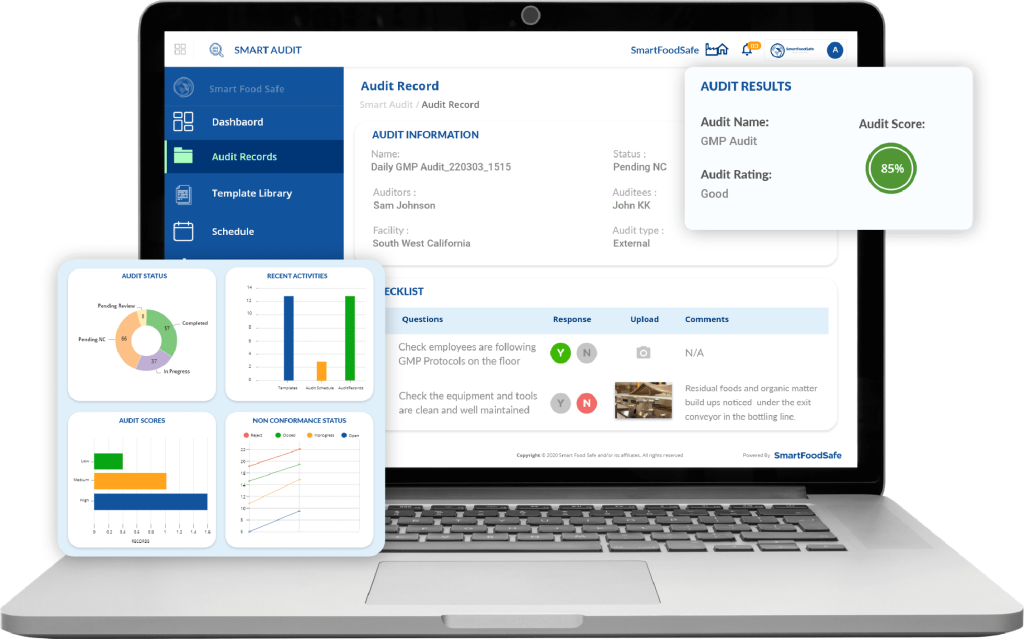
- SmartAudit: A cloud-based platform with AI-driven risk scoring, mobile apps, and IoT integration for real-time monitoring. Syncs with ERP/MES for seamless risk management.
- LogicGate: Offers customizable risk workflows and dashboards, ideal for complex manufacturing operations.
- MetricStream: Specializes in GRC, with robust tools for risk assessment and compliance tracking.
- Resolver: Provides incident management and risk analytics for manufacturing safety risks.
- AuditBoard: Automates risk workflows and CAPA, perfect for regulated industries like pharma.
Choose tools with SOC 2 compliance, API integrations, and user-friendly interfaces to ensure scalability and adoption.
Common Pitfalls and How to Avoid Them
- Data Migration Errors: Incomplete transfers from paper to digital create gaps and compliance risks.
Solution: Use automated import tools for thorough, accurate conversion during setup. - Team Resistance: Employees may cling to paper due to familiarity, hindering adoption.
Solution: Demonstrate 40% time savings in training to highlight efficiency gains. - Security Risks: Non-compliant platforms expose data to breaches and fines. Solution: Select SOC 2/GDPR-certified tools with encryption for robust protection.
- Overcomplication: Excessive customization delays implementation and overwhelms users.
Solution: Begin with basic templates and scale features gradually.
Best Practices for Operational Risk Management in 2025
To excel in ORM, adopt these expert-backed strategies:
- Use AI and Automation: Tools like Smart Audit predict risks and automate workflows, saving up to 50% on assessment time.
- Standardize Across Sites: Deploy consistent risk frameworks globally, ensuring uniform compliance.
- Foster Collaboration: Use cloud platforms to share risk data with teams and suppliers.
- Track KPIs: Monitor metrics like downtime or incident rates via dashboards to spot trends.
- Stay Compliant: Align with ISO 31000 and industry standards, using digital tools to centralize documentation.
Why Smart Audit Excels for Operational Risk Management
SmartAudit is tailored for manufacturing ORM, offering:
- AI Risk Scoring: Identifies high-priority risks like supplier delays.
- Mobile Apps: iOS/Android apps for on-site risk assessments.
- Real-Time Dashboards: Cloud-based metrics for multi-site visibility.
Operational risk management is critical for manufacturing success in 2025, ensuring compliance, efficiency, and resilience. By leveraging digital tools like Smart Audit, manufacturers can proactively manage risks, from equipment failures to supply chain disruptions.