22 Nov 2025

A food safety audit is a systematic, independent, and documented evaluation process used to assess whether a food business’s food safety management system is effectively implemented and compliant with relevant laws, regulations, and industry standards. It plays a vital role in ensuring that food handling, processing, and distribution practices meet established safety requirements aimed at protecting public health.
At its core, a food safety audit provides a clear snapshot of the current state of a business’s food safety operations. It identifies strengths, uncovers gaps or areas of non-compliance, and recommends actionable improvements. These findings are compiled into a detailed audit report, which becomes a valuable tool for enhancing food safety protocols and maintaining accountability across operations.
With growing consumer awareness around foodborne illnesses, contamination risks, and regulatory expectations, food safety audits have become more critical than ever.
To truly grasp the importance of food safety auditing, it’s essential to first understand what food safety standards entail. These standards—established by national regulatory bodies like the FDA (21 CFR 117), global organizations such as the World Health Organization (WHO) and the Global Food Safety Initiative (GFSI), and industry-specific frameworks like SQF—define the rules and best practices that safeguard the entire food supply chain. Food safety standards span the entire lifecycle of food production, from sourcing ingredients to manufacturing, packaging, and distribution. Their primary goal is to reduce the risk of contamination, prevent foodborne illnesses, and protect both workers and consumers.
So why are food safety audits indispensable for your business?
A food safety audit is a structured and objective process used to evaluate how well your food safety management system (FSMS) is functioning in practice. Audits focus on the critical control points of food operations: the design and implementation of your FSMS, hygiene practices, sanitation procedures, facility layout, storage methods, food handling processes, and employee behavior. Auditors compare documented procedures with real-world practices to assess whether safety protocols are effectively implemented and adhered to.
One of the biggest advantages of conducting food safety audits is their ability to offer real-time insight into operational performance. Unlike reviews of past records alone, audits assess current practices and identify potential weak points. This proactive approach allows for the early detection of issues, enabling the implementation of preventive measures before problems escalate—ultimately reducing risk, cost, and liability.
Audits also provide an opportunity to strengthen internal communication and engagement. Through staff interviews and on-site observations, auditors gain a comprehensive understanding of your food safety culture. These interactions encourage employee participation, create awareness, and foster a shared sense of responsibility—all of which are key to building a sustainable food safety culture.
Failing to comply with food safety regulations can have severe consequences. Contamination incidents traced back to your company could lead to regulatory penalties, product recalls, reputational damage, and loss of consumer trust. Internally, noncompliance can lower morale and reduce confidence in leadership. Externally, it may impact customer retention and overall sales performance.
Food safety audits come in three primary forms:
The type of audit you choose depends on your objectives—whether for internal performance improvement, supplier qualification, certification, or compliance with regulatory and customer requirements.
During a food safety audit, key operational areas are closely examined to identify compliance gaps, potential risks, and opportunities for improvement. These components are based on established food safety laws and are critical to ensuring the safe handling and production of food across the supply chain.
Below are the core components typically evaluated during a food safety audit:
Conducting a food safety audit—whether internally by your quality assurance team or externally through a third-party auditor—requires a systematic approach to ensure all critical control points and compliance areas are effectively assessed. Below is a structured breakdown of the key stages involved in executing a food safety audit:
Whether audits are scheduled or surprise visits by regulatory bodies, following a systematic preparation process ensures your facility is always audit-ready. Here’s how to do it in eight practical steps:
Audit readiness starts with knowledge. Everyone involved—from front-line workers to management—should have a solid understanding of food safety fundamentals. Being able to confidently explain your food handling processes, identify potential hazards, and describe how those risks are controlled shows that your team is competent and your systems are functioning as intended. The inability to answer basic questions during an audit can quickly raise red flags.
Prerequisite programs (PRPs) form the foundation of any food safety system. Before an audit, ensure all core programs—such as Good Manufacturing Practices (GMPs), cleaning and sanitation protocols, pest control, personnel hygiene, and allergen management—are implemented, documented, and up to date. These supporting systems demonstrate that your facility is maintaining a clean, organized, and food-safe environment.
At the heart of your food safety system is a risk-based approach like HACCP (Hazard Analysis and Critical Control Points) or HARPC (Hazard Analysis and Risk-Based Preventive Controls). Make sure this plan reflects current operations, includes accurate hazard identification, and clearly outlines preventive measures, monitoring procedures, and corrective actions. A well-structured, regularly updated plan demonstrates preparedness and compliance.
Schedule regular internal reviews of your Food Safety Management System (FSMS) to ensure it is working as intended. These reviews should be structured, collaborative sessions involving key team members to assess what’s working, what needs adjustment, and where further controls are needed.
One of the first things an auditor will ask for is documentation. Ensure all food safety records—such as monitoring logs, verification forms, supplier audits, equipment maintenance reports, and corrective action records—are complete, accurate, and easy to retrieve. Well-maintained documentation is proof that your processes are being followed and continuously verified.
With so many moving parts in a food operation, preparing without a checklist can lead to oversights. Develop audit preparation checklists that align with audit criteria and internal processes. These checklists help your team systematically walk through requirements, identify any gaps, and prioritize corrective actions before the actual audit.
Simulating the audit environment through regular internal audits is one of the most effective ways to stay prepared. These audits familiarize your staff with audit procedures, uncover hidden issues, and reinforce compliance habits.
A well-informed and involved workforce is crucial during any audit. Conduct regular training sessions to ensure every team member understands food safety principles, their role in maintaining standards, and what to expect during an audit. This includes orienting new hires, refreshing existing staff, and creating a mindset that values food safety as a shared responsibility.
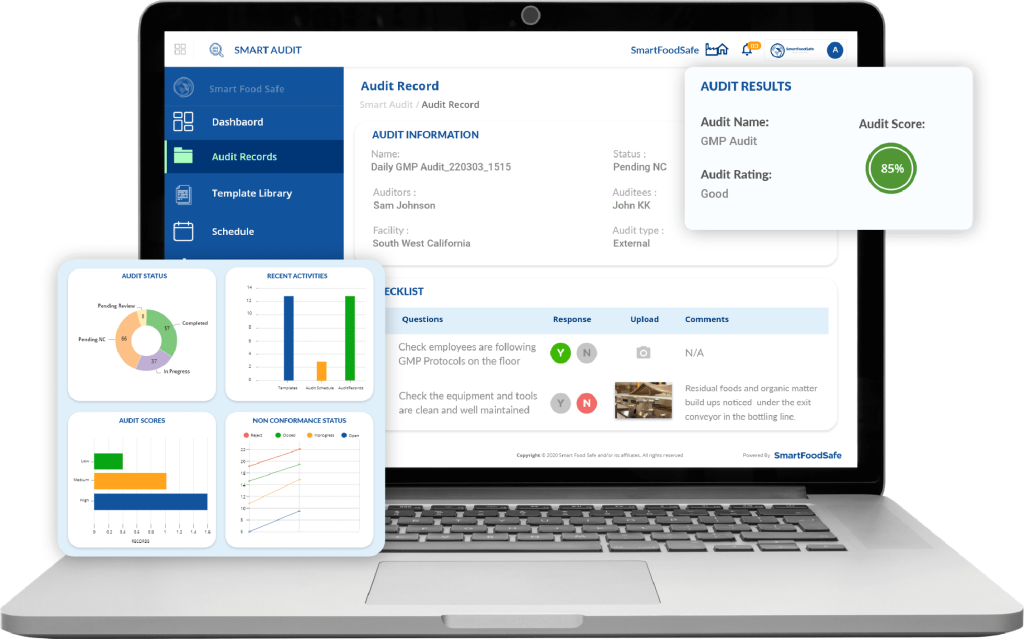
Smart Audit offers a digital-first solution that transforms traditional, manual audit methods into an organized, automated, and data-driven set up tailored for food businesses of all sizes.
Smart Audit enables you to move away from cumbersome paper-based systems by offering customizable digital checklists and pre-loaded templates. Smart Audit allows your team to document observations, upload evidence, assign non-conformances, and generate audit reports all within a centralized, cloud-based platform.
To help organizations stay on track, Smart Audit provides scheduling tools with alerts and reminders, ensuring that audits are carried out on time and nothing is overlooked. The platform also supports offline functionality, enabling audit execution in remote production sites or areas with limited internet connectivity. Once reconnected, all data syncs back to the system.
What truly sets Smart Audit apart is its built-in corrective and preventive action (CAPA) workflows. When a non-conformance is identified, the system assists in a structured resolution process—from assigning responsibility and setting deadlines to verifying the effectiveness of the solution.
Smart Audit also delivers powerful insights through real-time dashboards and audit analytics. These visual tools help quality managers monitor recurring issues, track audit scores across departments or sites, and make informed decisions based on trends and performance indicators. The ability to generate custom reports at the click of a button not only saves time but also supports compliance documentation for external auditors and regulators.
Designed to grow with your organization, Smart Audit is scalable, mobile-responsive, and multilingual, making it ideal for multi-site operations. Its intuitive user interface minimizes training needs and encourages adoption across teams, ensuring consistency in how audits are performed and reported.
By choosing Smart Audit, food businesses gain a modern, reliable, and cost-effective way to strengthen compliance, and improve audit readiness, to bridge any gaps through food safety audits into everyday operations.
Have a consistent, working internal audit strategy that continuously brings about compliance in the middle of regulatory updates with Smart Audit’s audit management features.
Have a consistent, working internal audit strategy that continuously brings about compliance in the middle of regulatory updates with Smart Audit’s audit management features.
Signup to receive latest news, insights and updates on audits management

 English
 French
 Spanish

