English
 French
 Spanish


Workplace safety isn’t just a box to check—it’s the heartbeat of every thriving business. Staying compliant with safety regulations isn’t only about avoiding fines; it’s about honoring your commitment to protecting your team. This is where OSHA (Occupational Safety and Health Administration) comes into action for enforcing workplace safety standards through unannounced inspections. While the idea of an OSHA visit might bring up the perception of creating havoc and being overwhelming, it doesn’t have to. But how? Preparation, proactive strategies, and the power of digital tools to turn chaos into clarity.
Here, we’ll dive into what OSHA inspections are, why they matter, and how going digital can revolutionize the way you prepare, execute, and maintain compliance. Let’s get started.
What Are OSHA Inspections & Why Do They Matter?
OSHA inspections are surprise visits conducted by compliance officers to ensure workplaces adhere to OSHA’s safety and health standards. These inspections are unannounced to maintain their effectiveness and credibility.
These inspections can be triggered by:
Imminent Danger Reports: Situations where workers face immediate risk.
Fatalities or Catastrophic Incidents: Workplace accidents resulting in death or severe injuries.
Employee Complaints: Workers reporting unsafe conditions.
High-Hazard Industries: Industries with historically higher risks, such as construction or manufacturing.
Special Emphasis Programs: Targeted enforcement efforts in specific high-risk areas.
The consequences of failing an OSHA inspection can be severe, including citations, penalties, and even business shutdowns. On the flip side, a well-prepared workplace not only avoids these pitfalls but also fosters a culture of safety that boosts employee morale and productivity.
Anyhow in today’s business environment, conventional means of being prepped for OSHA inspections sometimes is not enough due to persistent bottlenecks that can make the inspections tedious.
Challenges Persisting in the Traditional OSHA Preparation
Traditionally, preparing for an OSHA inspection has been a manual, time-intensive process. Companies often scramble due to the following challenges:
1. Manual Record-Keeping and Documentation
Traditional OSHA preparation heavily relies on paper-based records and spreadsheets to track safety audits, training sessions, and incident reports. This approach leads to:
- Disorganization: Critical documents like OSHA 300 logs, equipment maintenance records, and safety manuals are often scattered or misplaced.
- Time-Intensive Retrieval: Locating specific documents during an unannounced inspection can take hours, causing unnecessary delays.
- Human Error: Manually updating records increases the likelihood of errors, omissions, and inconsistencies.
2. Lack of Proactive Safety Monitoring
- Missed Opportunities: Potential hazards go unnoticed without proactive audits and real-time monitoring.
- Delayed Corrective Actions: Identifying and addressing safety issues takes longer without automated workflows.
3. Inefficiencies in Internal Audits
- Laborious Processes: Manually creating checklists, conducting audits, and compiling reports consume significant time and resources.
- Inconsistent Reporting: Audits may lack uniformity, making it challenging to identify trends or recurring issues.
- Limited Follow-Up: Tracking corrective actions from start to completion is often inefficient and prone to oversight.
4. Limited Data Accessibility & Transparency
- Fragmented Data: Safety information is often stored in silos, making it difficult to consolidate and analyze.
- Limited Insights: Without centralized data, organizations struggle to identify patterns or make informed decisions.
5. Difficulty in Handling Unannounced Inspections
- Lack of Readiness: Organizations may scramble to gather documents or organize site walkthroughs.
- Unprepared Staff: Employees may be unsure about how to handle inspection protocols.
- Increased Risk of Violations: Disorganization and inconsistencies increase the likelihood of non-compliance citations.
This reactive approach leaves room for error, delays, and stress. But what if there was a better way? It can be achieved by integrating digital capabilities to simplify and elevate the OSHA compliance process.
Digital Means to Effectively Stay Ready for OSHA Inspections
The era of digging through filing cabinets for safety records is over. Digital platforms can enable you to consolidate all OSHA-related documents in a secure, cloud-based system. This ensures that critical information is easily accessible during an inspection, eliminating the chaos of last-minute searches.
Compliance with OSHA standards can be seamlessly tracked with digital tools. Automated alerts notify you of upcoming updates, required corrective actions, or expiring certifications, ensuring your workplace remains inspection-ready at all times.
In case of an incident, digital solutions empower employees to report issues in real-time. Using features like photo uploads and detailed descriptions, investigations can be expedited, and corrective actions can be implemented promptly to prevent recurrence.
Furthermore, advanced analytics and reporting capabilities offered by digital platforms provide actionable insights. These tools help identify safety trends, monitor progress, and make data-driven decisions to continuously enhance workplace safety.
Step 1: Audit Your Existing Processes
Begin by reviewing your current OSHA compliance workflows. Identify inefficiencies, gaps, and bottlenecks where digital tools can deliver the most value, such as document management or incident tracking.
Step 2: Choose the Right Digital Platform
Select a platform tailored to OSHA compliance needs. Look for features such as compliance tracking and alerts, customizable inspection checklists, audit workflow automation, and reporting. Ensure the software is intuitive, scalable, and compatible with your business operations.
Step 3: Digitize and Centralize Your Records
Upload all OSHA-related documents—safety manuals, inspection logs, training certifications, and OSHA 300 logs—to your chosen platform. Organize them systematically for quick retrieval during inspections.
Step 4: Automate Compliance Tracking
Set up automated notifications for compliance deadlines, training renewals, or corrective actions. This ensures that nothing slips through the cracks and keeps your organization proactive rather than reactive.
Step 5: Conduct Regular Digital Self-Audits
Leverage the platform’s analytics and reporting tools to perform regular internal audits. Use these insights to address potential issues, streamline processes, and maintain continuous readiness for inspections.
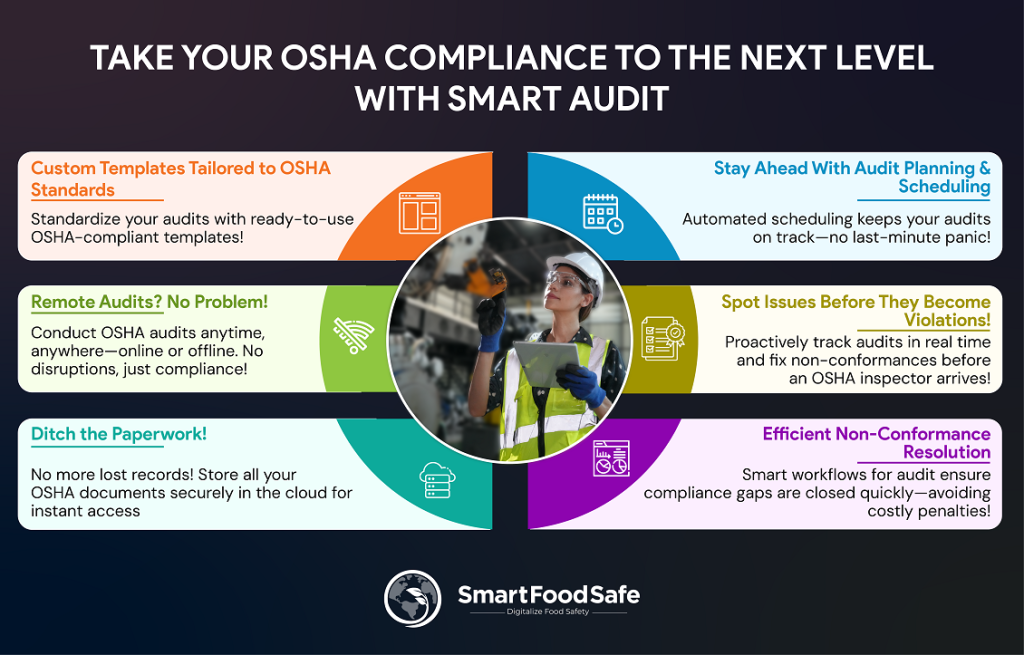
Take Your OSHA Compliance to the Next Level With Smart Audit
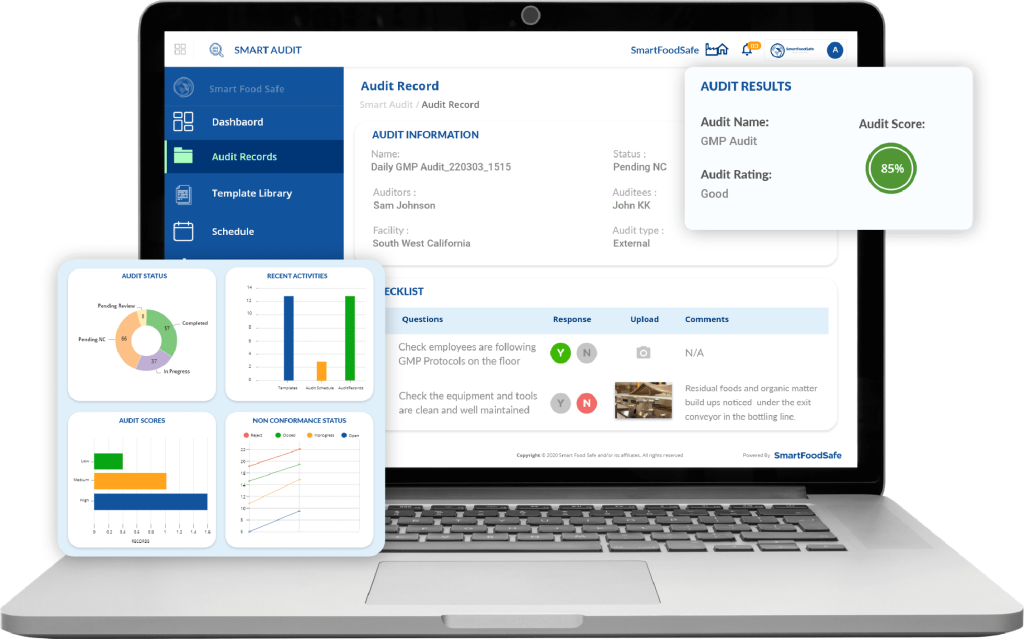
Smart Audit redefines how businesses prepare for inspections by providing a streamlined, digital-first approach to audit management. With advanced tools and features, it ensures your organization is always inspection-ready while fostering a culture of workplace safety and compliance excellence.
Here’s how Smart Audit helps you keep your OSHA inspections hassle-free while elevating your OSHA compliance strategy:
⇒ Eliminate Paperwork with Digital Audit Management
Ditch the clutter! Smart Audit digitizes your entire audit process, allowing you to store OSHA-related records in a secure, cloud-based system for instant access during inspections.
⇒ Stay Connected, Even in Remote Locations
Whether on-site or offsite, Smart Audit keeps your OSHA audits running without interruption. With cloud-based functionality and offline capabilities, inspections can continue without delays, ensuring compliance anytime, anywhere.
⇒ Customize Templates for OSHA Standards
No more one-size-fits-all! Smart Audit’s customizable templates align with OSHA requirements, standardizing data collection and reporting while minimizing errors and inconsistencies.
⇒ Simplify Audit Planning & Scheduling
Stay ahead with automated scheduling tools that help you allocate resources effectively and complete inspections on time. With Smart Audit, OSHA inspection planning becomes effortless—so you’re always prepared.
⇒ Proactive Monitoring for Compliance Readiness
Stay in control with real-time tracking of ongoing audits. Identify gaps early, address potential non-conformances proactively, and ensure compliance before an inspector arrives.
⇒ Efficient Non-Conformance Resolution
Corrective actions made simple! Automate workflows, track issue resolution, and receive alerts to ensure compliance gaps are closed quickly and efficiently, reducing the risk of OSHA penalties.
⇒ Make Informed Decisions with Advanced Analytics
Unlock actionable insights with Smart Audit’s powerful reporting tools. Identify safety trends, track compliance progress, and drive continuous improvement in your workplace safety programs.