English
 French
 Spanish


Are you aware that audit fatigue, also known as compliance fatigue, is real?
It is simply the phenomenon of employees getting exhausted or frustrated with repeated and lengthy audit processes that often yield little to no effective output, rendering them disengaged or feeling drained. Sounds familiar?
Audit fatigue can be a significant concern in industries subject to frequent audits due to internal policies or regulatory requirements. Risk-based audits offer a practical solution to alleviating audit fatigue by focusing resources on the most critical areas of risk within an organization. Instead of conducting exhaustive, one-size-fits-all audits, this approach prioritizes key risk areas that pose the greatest threat to compliance, quality, and operational efficiency.
What is a Risk-Based Audit?
A risk-based audit is an approach that prioritizes audit resources on areas or processes that pose the highest risks to the organization. Instead of conducting a blanket audit of all areas equally, the risk-based audit model assesses and identifies which areas are more vulnerable to risk, whether operational, compliance-related, or reputational, and allocates resources accordingly.
Risk is typically measured by factors such as the likelihood of occurrence, the impact of potential issues, and the existing controls in place to mitigate these risks. The audit’s objective is to ensure these risks are being managed adequately, highlighting weaknesses in controls or processes and recommending improvements.
Why Are Risk-Based Audits Important?
The importance of risk-based audits can be understood by the following key benefits:
- Improved Risk Compliance – The frequent nature of risk-based audits helps close knowledge gaps and provides continuous education to staff responsible for managing risk controls on a daily basis. Regular reporting ensures that risk compliance stays top-of-mind, rather than becoming a once-a-year checklist activity that’s easily overlooked.
- Deeper Understanding of Risk Levels – By aligning audits with a risk management framework, businesses can prioritize risks more effectively based on factors like risk velocity and severity. This approach allows organizations to understand the potential impact of their actions on each risk and identify opportunities for improvement to mitigate future threats.
- Increased Resilience Amid Uncertainty – Risk-based audits prove invaluable in times of uncertainty, offering a structured and consistent way to manage risk while preparing for emerging risks that may arise in the future.
- Optimized Use of Audit Resources – Unlike traditional internal audits, risk-based auditing directs resources in a more targeted manner. Audit plans are developed based on the severity and volume of risks requiring assurance from senior management. Audit teams focus their efforts on high-risk areas, ensuring resources are deployed where they’re needed most.
- Greater Engagement from Senior Management – Risk-based audits promote a more inclusive approach by fostering awareness of risks and the audit process across the organization, through workshops and self-assessments. Senior management, being more involved in this process, gains a better understanding of how audit recommendations align with business objectives, leading to greater buy-in and ownership of risk management.
- Higher Likelihood of Meeting Business Objectives – By integrating all aspects of the risk and audit landscape—objectives, risks, controls, processes, and evaluations—a risk-based audit approach enables organizations to see the connection between each element within the broader risk management framework. It becomes easier to detect when a key objective is at risk, allowing timely action to mitigate potential impacts and maintain focus on achieving business goals.
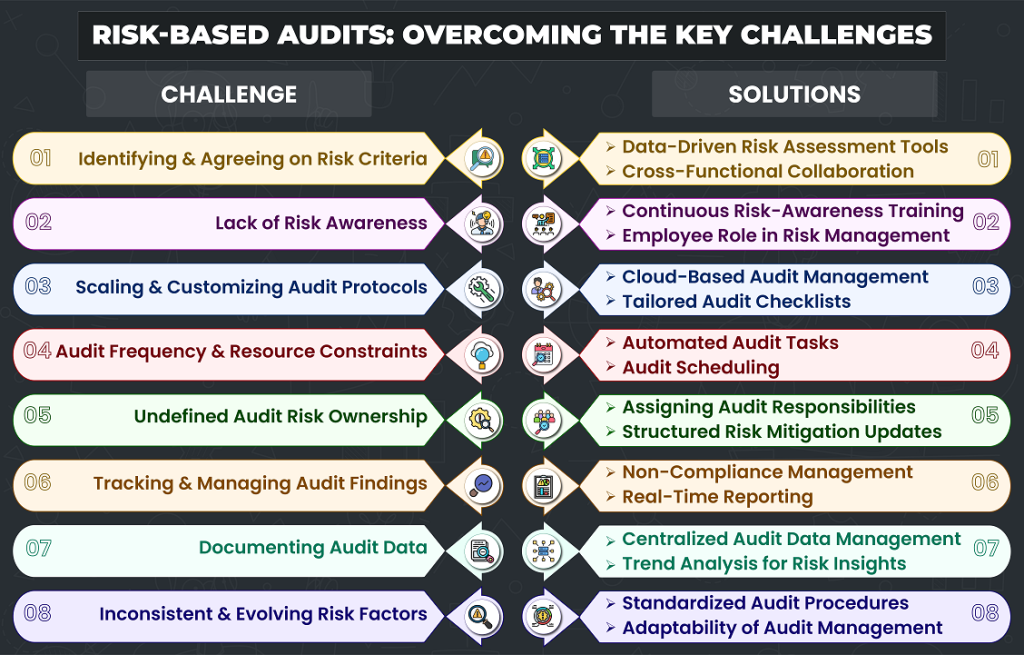
How to Implement a Risk-Based Audit Approach Overcoming the Key Challenges
Implementing a risk-based audit involves a structured and methodical approach to ensure the audit focuses on the right areas. However, the transition from traditional audits to a risk-based model comes with its own set of challenges. Below are key challenges you may face during implementation, along with practical solutions to overcome them.
Establishing a Comprehensive Risk Assessment Framework
⇒ Challenge: One of the major hurdles in risk-based audits is identifying and agreeing on risk criteria. Different departments may have varied interpretations of what constitutes “risk.” This can lead to a fragmented scope, where key areas are overlooked, or excessive time is spent on low-risk areas.
⇒ Solution
- Data-Driven Risk Assessment: Begin by collecting and analyzing historical data, such as audit results, incident reports, and non-compliance records.
- Use of Risk Assessment Tools: Employ risk management tools that can provide real-time risk profiling based on evolving data, offering a more objective approach and ensuring the focus remains on high-risk areas and they are prioritized for audits.
- Cross-functional Collaboration: Involve key stakeholders from various departments during the initial planning phase. A collaborative effort will ensure that diverse risks are considered.
Promoting Risk Awareness Among Employees
⇒ Challenge: Employees often lack awareness of how to identify, categorize, and report risks. This is further aggravated by the resistance to adopting risk-based audits due to the familiarity of traditional audit practices.
⇒ Solution
- Training & Education: Integrate continuous risk-awareness training into your organizational culture. Show employees how their role contributes to the broader risk management process, ensuring that accurate risk information is consistently reported.
Scaling & Customization of Risk-Based Audit Protocols
⇒ Challenge: OAs businesses grow, so does the complexity of auditing across multiple locations or departments, which can overwhelm risk-based audit programs. A one-size-fits-all approach can lead to inefficiencies.
⇒ Solution
- Cloud-based Audit Management: Utilize a cloud-based audit management solution that allows centralized oversight while supporting audits at different locations. This enables data from all sites to be compiled, analyzed, and shared in real-time.
- Tailored Audit Checklists: Develop specific checklists that cater to the identified risks within each department or operation.
Handling Audit Frequency & Resource Constraints
⇒ Challenge: OAs risk-based audits prioritize areas with higher risks, this can lead to resource bottlenecks, depending on audit frequencies.
⇒ Solution
- Automation of Routine Audit Tasks: Automate routine audit tasks and data collection to reduce the burden on your audit team, allowing the dynamic allocation of resources based on risk levels and auditor availability.
- Audit Scheduling: Instead of auditing all areas at the same frequency, implement a risk-based variable frequency model where high-risk areas are audited more frequently.
Defining Audit Risk Ownership
⇒ Challenge: OIn many organizations, risk ownership is not clearly defined, which can result in weak accountability and follow-up after an audit.
⇒ Solution
- Assign Audit Responsibilities: Clearly dictate responsibility for each identified risk to specific individuals or teams, involving a process for risk mitigation updates as well.
Tracking & Managing Audit Findings
⇒ Challenge: ORisk-based audits can generate several findings, making it difficult to prioritize actions based on the criticality of the findings.
⇒ Solution
- Non-Compliance Management: Categorize audit findings based on risk levels for teams to address the most critical issues first with the predetermined corrective actions in place, ensuring that high-risk non-compliances are resolved promptly.
- Real-Time Reporting: Use audit management platforms with real-time reporting features that allow teams to monitor and act on findings instantly. By using dashboards and automated alerts, high-risk findings can be tracked until resolution.
Audit Data Management & Documentation
⇒ Challenge: Risk-based audits require detailed documentation, not only for internal tracking but also for external audits and certifications. Managing vast amounts of data across multiple audits can be difficult.
⇒ Solution
- Centralized Data Management Systems: Document and store audit results, risk assessments, and corrective actions adequately through a central repository ensuring that data is easily accessible, auditable, and can be reviewed by regulatory bodies when required.
- Trend Analysis: Implement trend analytics to help flag patterns or anomalies in audit results, providing more focused insights on recurring high-risk areas.
Ensuring Audit Consistency With Continuous Monitoring
⇒ Challenge: Audits are periodic, which means risks may evolve between audits, leaving potential compliance gaps.
⇒ Solution
- Standardized Risk-based Audit Procedures: Develop a standardized risk-based audit methodology, complete with predefined templates, checklists, and audit trails. .
- Adaptability of Audit Management: Ensure your audit system is flexible and can easily accommodate regulatory updates by enabling quick adjustments in the audit process as necessary, ensuring that your organization remains compliant.
The implementation of risk-based audits offers organizations a proactive and effective way to manage risks, ensure compliance, and drive continuous improvement. By emphasizing audit efforts on the areas of highest risk, businesses can better allocate resources, address critical issues before they escalate, and build trust with stakeholders. Ultimately by automating the risk-based audit lifecycle, companies can turn risk-based audits into a strategic asset that supports long-term organizational growth and stability.
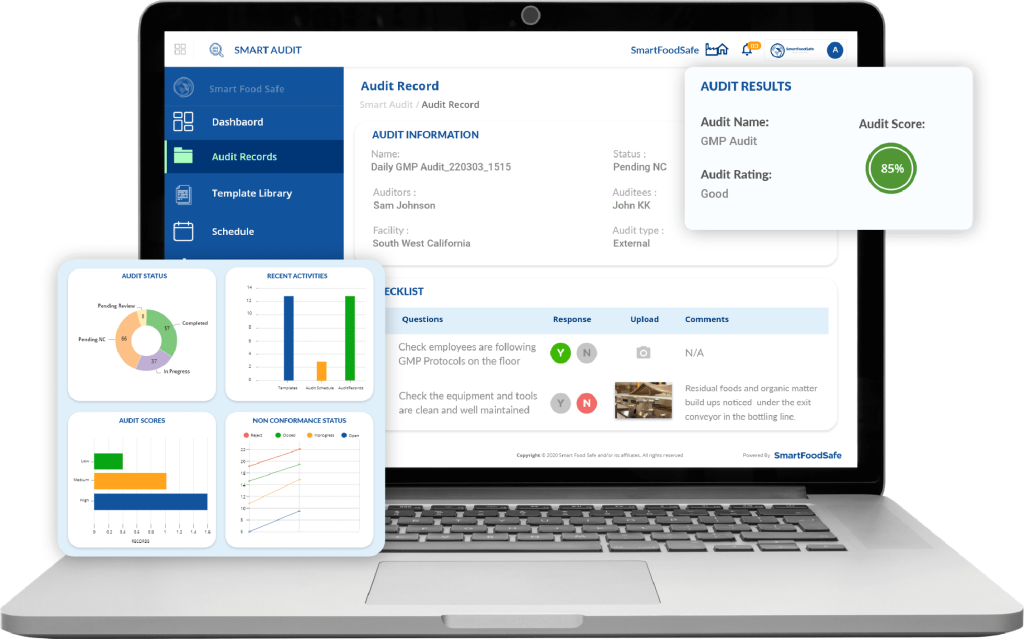
Employ Smart Audit to Conduct Risk-Based Audits With Ease
Smart Audit simplifies and optimizes the entire risk-based audit process by providing a suite of features designed for efficient planning, execution, and tracking of audits while ensuring compliance with regulations and standards.